
Six Word Memoirs
Six word memoirs are exactly what they sound like. Your memoir in six words. I've always loved the concept but was too intimidated to ever try and write one.
Enter The Six-Word Festival on Twitter.
Suddenly, there were prompts! And a schedule! And a deadline! And free stuff!
If you know me at all, you know these are my trigers. So, when the festival kicked off on Tuesday, I decided to join in.
First up? “I Will Never Do That Again” ... easy.
Six word memoirs are exactly what they sound like. Your memoir in six words. I've always loved the concept but was too intimidated to ever try and write one.
Enter The Six-Word Festival on Twitter.
Suddenly, there were prompts! And a schedule! And a deadline! And free stuff!
If you know me at all, you know these are my trigers. So, when the festival kicked off on Tuesday, I decided to join in.
First up? “I Will Never Do That Again” ... easy.
@sixwords @JasonBiggs @HarperCollins Class reunion. Got a new haircut. #neveragain #sixwords
— Sarah S Holland (@bluegrassred) September 24, 2013
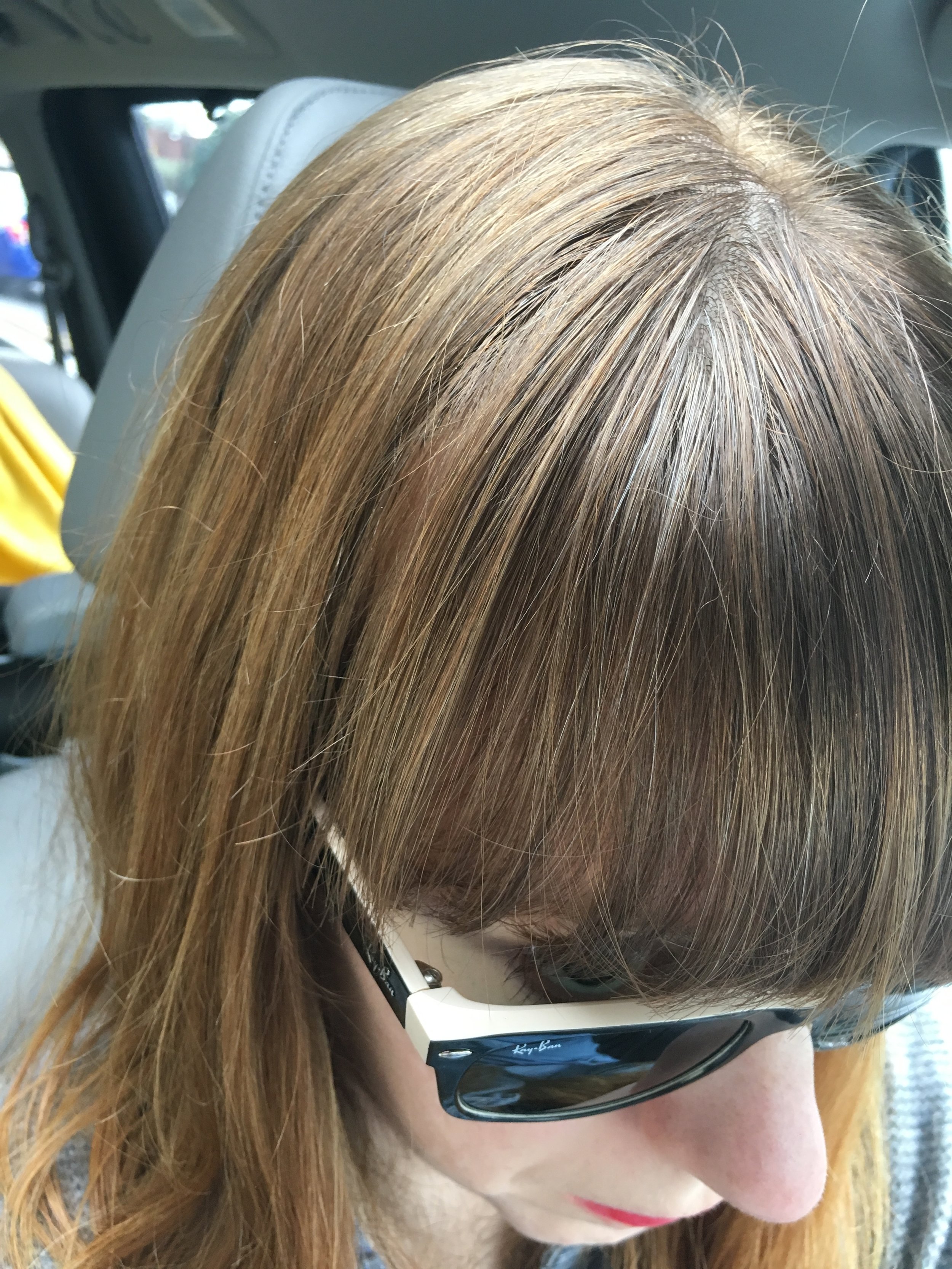
And because I know y'all are wondering how bad the hair actually was.
Then, it was “Thou Shalt Tweet a New Commandment” (in #sixwords) and my first entry got favorited by one of the judges! You know the truth of this commandment if you're a parent.
Thou shalt not wake sleeping baby @sixwords @Slate @davidplotz @ajjacobs #newcommandment #sixwords
— Sarah S Holland (@bluegrassred) September 24, 2013
Always keep markers out of reach. @sixwords @Slate @davidplotz @ajjacobs #sixwords #NewCommandment pic.twitter.com/5ZJrJelg5P
— Sarah S Holland (@bluegrassred) September 24, 2013
Then, some of y'all got in on the fun at my Facebook page.
The next prompt was probably my favorite. “The Secret Ingredients to Happiness Are…”
Again, y'all had some pretty awesome ideas of your own.
The last prompt of the day was “I only turn my phone off when…” I'm a little embarrassed to admit I couldn't actually think of a situation during which I turn my phone off. I finally came up with this.
@sixwords @RWW OH it has an off button!?! #nophone #sixwords
— Sarah S Holland (@bluegrassred) September 24, 2013
Day Two started with a great prompt but I was too late so we played along on Facebook.
The next prompt I was all over - “The #SixWords Mom Never Told Me.” Although admittedly I was using excellent advice my mom and grandmother HAD in fact told me.
Get mad at man - not jewelry! #sixwords #momforgot @sixwords @MomCBS @AllisonBJanney @AnnaKFaris @sadiecalvano
— Sarah S Holland (@bluegrassred) September 25, 2013
Main course? Men are just dessert! #sixwords #momforgot @sixwords @MomCBS @AllisonBJanney @AnnaKFaris @sadiecalvano
— Sarah S Holland (@bluegrassred) September 25, 2013
Fat isn't the problem - sugar is. #sixwords #momforgot @sixwords @MomCBS @AllisonBJanney @AnnaKFaris @sadiecalvano
— Sarah S Holland (@bluegrassred) September 25, 2013
Then, it was “Secret of life _ _ _ ” [add three words].”
#threemore Secret of life: wake up early. Tell me & @sixwords in #sixwords @katiecouric
— Sarah S Holland (@bluegrassred) September 25, 2013
#threemore Secret of life: Edit. Edit. Edit. Tell me & @sixwords in #sixwords @katiecouric
— Sarah S Holland (@bluegrassred) September 25, 2013
The day ended with Judge Tim Gunn asking “Your personal style—in six words?”
The last day of the festival is today and I HIGHLY recommend participating. Here is the schedule if you're interested and I'll try and post some of the prompts on my Facebook as well.
Of course, if you're not a big prompt person, FEEL FREE to tell me your six word memoir in the comments section. I would LOVE to hear from y'all....in six words or less!

Another Mother's Perspective on Syria
I hope that as I write these words, a true diplomatic solution is in progress for Syria. In the meantime, I think about how conflict in the Middle East has been a given for generations, and I wonder if my two-year-old daughter will ever see an end. As I think about her, and about how much more efficient and complex and deadly the weapons of the future will be, I hope that we will seize this moment in time to start focusing on the only weapon that I believe can bring true, lasting peace to the Middle East: knowledge.
For the past few weeks, I have watched countless Facebook friends posting photos: “I’m against war in Syria.” Undoubtedly, most of them mean “I’m against American military intervention in Syria.” (And, undoubtedly, a few mean, “What did President Obama say? I’m against that.”). But, here’s the thing: it sounds like we, as Americans, don’t know that there is already a war in Syria. That there has been a war in Syria since 2011, and that there were many heinous atrocities and conflicts before 2011. That the use of chemical weapons might be new, but the slaughtering of innocent people is not. That this is another chapter in a long, tortured history.
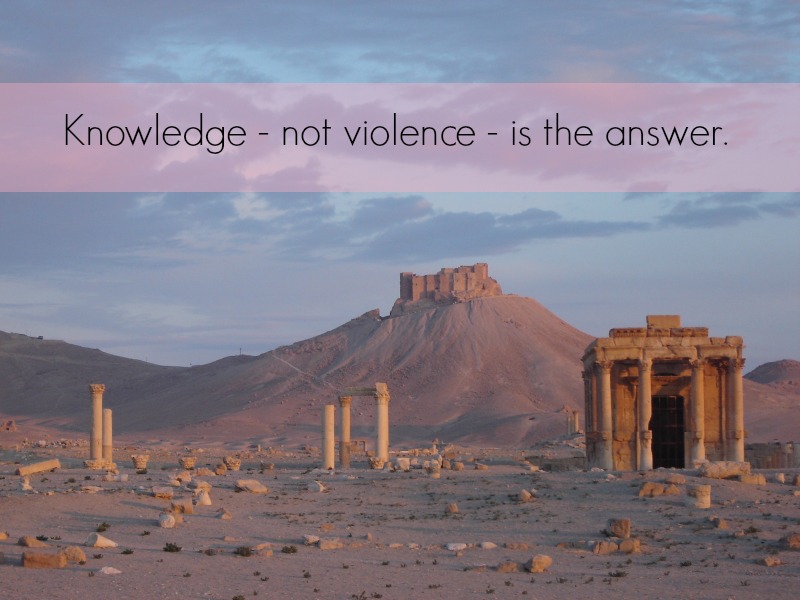
I hope that as I write these words, a true diplomatic solution is in progress for Syria. In the meantime, I think about how conflict in the Middle East has been a given for generations, and I wonder if my two-year-old daughter will ever see an end. As I think about her, and about how much more efficient and complex and deadly the weapons of the future will be, I hope that we will seize this moment in time to start focusing on the only weapon that I believe can bring true, lasting peace to the Middle East: knowledge.
For the past few weeks, I have watched countless Facebook friends posting photos: “I’m against war in Syria.” Undoubtedly, most of them mean “I’m against American military intervention in Syria.” (And, undoubtedly, a few mean, “What did President Obama say? I’m against that.”). But, here’s the thing: it sounds like we, as Americans, don’t know that there is already a war in Syria. That there has been a war in Syria since 2011, and that there were many heinous atrocities and conflicts before 2011. That the use of chemical weapons might be new, but the slaughtering of innocent people is not. That this is another chapter in a long, tortured history.
So, what do I think should happen in Syria? I have no idea because I don’t know enough. My knowledge of Damascus hearkens back largely to my Sunday School days, and I’m thinking that Sunday School probably presented a somewhat incomplete accounting of socioeconomic circumstances. This is the problem for all of us: we approach the Middle East the same way over and over and over again because our collective knowledge of the region is wholly inadequate. It seems highly likely that much of the sustained conflict in that region results from individuals with wholly inadequate understandings of the racial, religious, social, and economic backgrounds of its people drawing artificial lines to divide it up.
The one thing that I’m clear on is this: if violence could be transformative in the Middle East, the Middle East would already be transformed. We have tried the same thing over and over, a hundred different ways. It’s hard for me to imagine how military action in this particular circumstance could do anything but pile on to the death toll. I understand international norms and red lines. But it seems to me that norms and lines must give way to reality and impact.
The President is working hard to explain to us why Syria matters to U.S. national interests. If Syria matters enough to bomb, it matters enough to study. If we, as a country, came together to better understand the people and geography of the Middle East, I believe that knowledge would be more powerful and effective than any unmanned drone.
Beth is a mom, wife, sister, friend, and HR executive. She's also on a journey to become a yoga teacher. She likes watermelon, reality television, and politics.


A mother's thoughts on Syria
Congress returns to debate military action in Syria this week. I don’t envy them this task. Like many Americans, I have also been thinking about where I stand on this issue. At first, I was hesitant to share my thoughts. I’m no foreign policy expert. I have no advanced degree in Middle East studies. I have never even travelled to that part of the world.
And yet - maybe just maybe - there is room for my voice in the cacophony of sound coming from politicians and experts and talking heads. Maybe it is important for all of us to take a moment from our ordinary lives and think about extraordinary situations that seem so far removed from us.
Not so that we can find the “right” answer but so that we give the question the time it deserves.

Congress returns to debate military action in Syria this week. I don’t envy them this task. Like many Americans, I have also been thinking about where I stand on this issue. At first, I was hesitant to share my thoughts. I’m no foreign policy expert. I have no advanced degree in Middle East studies. I have never even travelled to that part of the world.
And yet - maybe just maybe - there is room for my voice in the cacophony of sound coming from politicians and experts and talking heads. Maybe it is important for all of us to take a moment from our ordinary lives and think about extraordinary situations that seem so far removed from us.
Not so that we can find the “right” answer but so that we give the question the time it deserves.
I don’t think anyone claims to have the “right” answer to the question of military action in Syria. I heard it described for even the most passionate politician as a matter of personal conscience.
My conscience tells me that the innocent slaughter of 1,500 people cannot be ignored. However, the reality is the United Nations estimates over 100,000 have already lost their lives in this civil war and, while we have far from ignored the situation, we have never threatened military strikes despite the ongoing loss of life.
My conscience tells me that military action is far from a simple solution and that history has taught us removing a violent dictator does not automatically restore peace. However, history has also taught us that ignoring violent dictators is far from a perfect solution as well.
It would seem that Syria is really a question about how you feel about violence as a solution. If you feel that violence is sometimes required in extreme situations, then it is difficult to argue this is not a situation that reaches those requirements. If you feel that violence is never a solution and only makes matters worse, then your position is clear.
I don’t know how I feel.
The optimistic side of my nature wants to believe the Gandhi’s and Martin Luther King’s of the world. I want to believe that non-violence is the only real answer.
In 2003, I wrote an op-ed for my college newspaper where I passionately argued against military action in Iraq.
We must take a collective breath and say that no matter what we will find another way and we must do it for ourselves and for our children. Alexis de Tocqueville said, “All those who seek to destroy the liberty of a democratic nation ought to know that war is the surest and shortest means of accomplishing it.” We must remember that and decide as a generation what legacy we will leave the world.
Ten years later, the future generations are no longer an abstract idea. They now sleep in my house and eat at my table and sit in my lap. It is because of them that I am now unwilling to remove any weapon from our arsenal.
It is not out of some fear for my own children that I now see things differently. I have no doubt that my children live in a dangerous and complicated world and any decision Congress makes regarding Syria will not change that.
It is more for the children already lost. If the roles were reversed and the leader of my country was using chemical weapons to slaughter his people, I would want other countries to come to our defense. I would want them to use violence. I would want them to act.
I don’t know if this is the right answer.
I don’t know if there is a right answer.
I just know the question affects us all.


Why Miley Matters
Last night Miley Cyrus twerked her way into the national conversation. People who haven’t watched MTV (much less the VMAs) in years are suddenly well-versed in the over-sexualized performance of the former Hanna Montana, as well as her co-performer Robin Thicke.
There has been a predictable backlash against Miley Cyrus. People are rightly claiming she’s in it for the attention. People are worrying about an ensuing Britney-like break with reality. People are doing a fair amount of slut-shaming.
However, when we make this discussion about the personal choices of Miley Cyrus we are missing the point entirely.
Miley matters but not for the reasons you think.

Last night Miley Cyrus twerked her way into the national conversation. People who haven’t watched MTV (much less the VMAs) in years are suddenly well-versed in the over-sexualized performance of the former Hanna Montana, as well as her co-performer Robin Thicke.
There has been a predictable backlash against Miley Cyrus. People are rightly claiming she’s in it for the attention. People are worrying about an ensuing Britney-like break with reality. People are doing a fair amount of slut-shaming.
However, when we make this discussion about the personal choices of Miley Cyrus we are missing the point entirely.
Miley matters but not for the reasons you think.
Miley matters because she represents an issue much bigger than the biggest teddy bear on that stage - the objectification of women in our society.
How about a little Women Studies 101 courtesy of Wikipedia?
Sexual objectification is the act of treating a person merely as an instrument of sexual pleasure, making them a "sex object". Objectification more broadly means treating a person as a commodity or an object, without regard to their personality or dignity.
So, when Miley dances near-nude and simulates a sex act on a fully clothed man twice her age, she is being objectified. When Miley herself simulates the act of anilingus on a black woman whose face we never see, that woman is being objectified. When barely clothed women walk around with giant sparkly signs with images of Rolexes, yachts, and champagne, those women are being objectified.
Don't take my word for it. Let Jean Kilbourne school you.
I know what you’re thinking. Those women (particularly Miley) are getting paid. They agreed to dance and gyrate and generally strut their stuff. Why should I care?
Well, because the images we take in matter. They affect us. If you think corporations would spend billions of dollars on marketing they didn’t KNOW would work, you are incredibly naive.
These images teach everyone, especially women, that we are not good enough as we are. Our boobs aren’t big enough. Our hair isn’t long enough. Our skin isn’t clear enough. Our thighs aren’t thin enough. And if they aren’t, we hold no value as sexual beings which is our only source of perceived power ... BUT lucky for us, they have just the procedure or product to help!
However, it's bigger than that. When you stop being a human and start being an object, then what I do to you or how I treat you does not matter.
I understand it is easier to believe media doesn’t affect you. We all want to think of ourselves as independent thinkers not swayed by the flashy images and catchy hooks of modern media. Music in particular is easy to ignore. Anne Helen Petersen has a great piece on the immunity of pop stars and how music covers all manner of sins.
There are dozens of other singers who have committed crimes, cultural or literal, that we ignore. And as much as Cyrus’s performance engenders intelligent conversations about race and sexuality, the fact remains that her song — “We Can’t Stop” — is infectious. Cyrus herself may not understand that the song’s power and poignancy stem from its sadness (someone on Facebook said “it sounds like the funeral music for a young person”), but that infectiousness makes Cyrus, the industrial earner, immune.
All summer long I’ve played Debbie Downer to every enthusiastic endorsement of Robin Thicke, Miley’s cohorts on stage last night, and his summer smash “Blurred Lines.” Over and over again I’ve argued the lyrics are offensive enough (“OK now he was close, tried to domesticate you But you're an animal, baby it's in your nature Just let me liberate you”) but the objectification of women in the video is particularly egregious.
And every time I get the same response, “But it’s such a great song!" or "Well, obviously I don't feel that way about women!" It reminds me of the reaction to racism I posted about earlier this summer. (And p.s. Miley's performance was also MASSIVELY racist.) You don't have to be a member of the KKK to say something racist and you don't have to be earning your wages on the pole to be affected by the objectification of women in media.
Miley might be easy to blame but this is everyone's problem





The Pros and Cons of Being Childless
I've invited my dear friend Lydia to share her thoughts on being childless. It felt wrong to invite a discussion and then not share this space with someone who has actually made the decision we're discussing. I've known Lydia for over fifteen years and I knew she would do the topic justice.
When I was a little girl, I don't remember having more than one baby doll. That sole doll was named Drowsy. I didn't carry her around like a baby, I didn't walk her in a play stroller, I didn't play "mom" to her. She was my friend - my pretty tow-headed, pink and white polka-dotted friend.
Eventually I outgrew Drowsy and grew up to be a young woman who claimed with intense conviction that she never wanted children.

Photo Credit: H is for Home via Compfight cc
I've invited my dear friend Lydia to share her thoughts on being childless. It felt wrong to invite a discussion and then not share this space with someone who has actually made the decision we're discussing. I've known Lydia for over fifteen years and I knew she would do the topic justice.
When I was a little girl, I don't remember having more than one baby doll. That sole doll was named Drowsy. I didn't carry her around like a baby, I didn't walk her in a play stroller, I didn't play "mom" to her. She was my friend - my pretty tow-headed, pink and white polka-dotted friend.
Eventually I outgrew Drowsy and grew up to be a young woman who claimed with intense conviction that she never wanted children. It wasn't until my late twenties that a feeling of indifference started manifesting itself regarding the issue. I decided that I didn't care one way or the other - if I met and fell in love with a person who wanted children, then we'd go down that path and either try to have our own children or adopt or foster. If I didn't meet a person with those dreams, then I was more than content to remain child-free. My mom made sure to place some Folic Acid supplements in my Christmas stocking - just in case. You know, as moms do!
As it turns out, I met a man who did not have those dreams and my husband and I are quite happy with our decision to not have children. We have robust lives individually and together - full of hobbies, family, a career and strong opinions about how we want to spend our time. There are many, many reasons for our decision. Just as with any family's decision, it's pretty personal, so I am choosing not to go into the details here. Let me just say that we know ourselves, we know what we want out of life, and we don't regret our decision.
With any decision of such magnitude, there are trade-offs between the good and the bad. I would not say that I am happier than my friends with children by virtue of my decision. The idea that I "have it all" is pretty ludicrous. It is such a subjective idea that there's no way to measure it. For example, to me, Beyonce really seems to have it all - talent, fame, fortune, Blue Ivy, etc.. Basically, we aren't ready for her jelly. However, I do not, at all, want what she has...the paparazzi, the public criticism, the inspection, etc.
It's all about your priorities as to whether or not you "have it all." Just like with success - no one can measure it but you.
With that in mind, though, here's a list of my personal pros to deciding not to have children:
- I am able to wake up at the last possible second in the mornings because I only have to get myself ready for the day.
- I can live my life with a relative lack of scrutiny - basically, the only decision I have to defend is this one of not having children (and it is not one that causes me untold pain, as those intrusive questions can be for others who do not have the luxury of a choice or who have experienced loss of a child) - there aren't a million little scrutinies to bear regarding the conception, gestation, birthing, feeding, rearing, etc. of my children. I don't understand how parents put up with all those judgments.
- My husband and I can take a trip to an adults-only resort in paradise. Yes. That Time Magazine cover photo is a (much) leaner version of us. ONCE in our lives so far have we taken such a trip. On our honeymoon. The takeaway here, though, is that I have many fewer restrictions on my comings-and-goings. We can decide to go wherever we want with only the limitation of vacation time and funds to get there. The same goes with a spur-of-the-moment trip to the movies or out on the town.
- No dirty diapers to change. No nighttime sickness to clean up. Generally, none of the icky stuff that comes along with people unable to care for themselves fully.
- The ability to return a nephew to their parents after being The Most Fun Aunt Ever without having to suffer the consequences of an overly-stimulated child. (I am easily manipulated into more sugar and later bedtimes!)
There are cons, though. I know that.
- There are no pulls at my heartstrings when that first cry, that first word or that first step happen.
- There is not that level of love and affection that only parents can feel for their children (I'd have to mention that there's also not the fear that comes along with it.)
- There are very few pieces of child art to hang on my refrigerator. (I love kid art.)
- My life is now very much different than those of my friends who are in the toddler and young child years with their families. We share the affection of friendship, but I know that we don't understand one another's lives any longer. That makes me sad, but I think it will improve as their children age and become more independent.
- There is a fear that I'll regret this decision one day.
- There is also a fear that my careful planning won't result in my being taken care of and provided for in the golden years of my life. It's a very real fear, but one that I mitigate by telling myself I have a large and loving family.
Like I said, earlier, it's a trade-off. Ultimately, having children was never a priority to me. I'm not sure what influenced that, but I do know that I've had many strong female role models that do not have children. My big Catholic family features three women who chose religious orders for their life. They obviously don't have children. My eldest aunt also doesn't have children - she's always been a beacon of knowledge and talent and wonder for me. She was the adult in the family who treated my cousins and I as adults from a very young age - I loved that! I have another aunt who chose to have a child on her own. That child just graduated college, which makes me feel incredibly old.
With this sort of family surrounding me, I've felt very little pressure to fit into that traditional role of middle-class American womanhood. I'd make a terrible soccer mom, so it's probably a really good thing!
Everyone's story is different, which makes humanity beautiful and wonderful. Raising children, trying to conceive children, adopting children, choosing to remain child-free - all are valid choices for a fulfilled life.
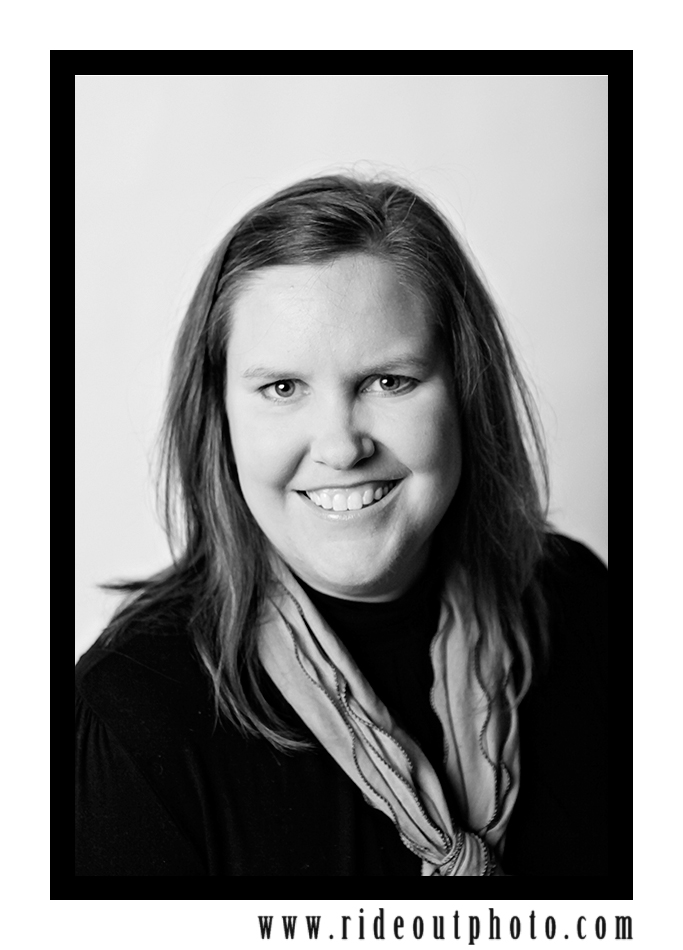
Lydia Powell is a 30-ish woman, married with two spoiled puppies. She enjoys reading, writing and is currently fighting a mean Candy Crush addiction. She is in the process of following her dream of opening her own business - a bookkeeping and accounting firm servicing small businesses.


Do childless people "have it all"?
What happens when having it all means not having children?
This is the question asked by Lauren Sandler in her Time Magazine cover story “The Childfree Life.”
“Having it all” is a phrase that haunts parents – particularly mothers – everywhere. Balancing the demands of family life and a career in order to walk the high wire act of personal fulfillment can seem like an impossible task.
Well, y’all, I’ve got bad news. Stop trying to walk that tightrope because it turns out we shouldn’t have joined the circus to begin with.

I have somehow managed to enjoy the beach both with and without children.
What happens when having it all means not having children?
This is the question asked by Lauren Sandler in her Time Magazine cover story “The Childfree Life.”
“Having it all” is a phrase that haunts parents – particularly mothers – everywhere. Balancing the demands of family life and a career in order to walk the high wire act of personal fulfillment can seem like an impossible task.
Well, y’all, I’ve got bad news. Stop trying to walk that tightrope because it turns out we could have skipped the circus all together.
According the article, an increasing number of men and women are choosing to find personal fulfillment without pursuing parenthood. Between 2007 and 2011, the American fertility rate has decreased 9%. In 1976, one in 10 women ages 40-44 were childless. Today the number is one in 5.
Sandler examines some interesting theories on the decreasing fertility rate from the recession to intelligence. (Spoiler alert! Smart people chose not to have kids apparently.) Whatever the causes, these choices are difficult in a society that promotes family – and motherhood in particular.
Don't get me wrong. I felt real sympathy for many of the women who spoke of how indelibly linked motherhood and womanhood are and how difficult it can be to separate the two.
Women feel so much pressure to reproduce and are questioned more openly about their decisions. (Of course, I’m not sure the article is actually helping address that stereotype when it devotes an entire page to celebrity “non-moms” without giving equal time to famous men who have chosen not to have children.) In particular, one expert argues “women are living in a ‘damned if you do damned if you don’t’ social context in a country that she believes emphasizes self-sufficiency equally alongside a deep commitment to motherhood.”
I remember returning home for my great-grandmother’s funeral mere months after marrying my husband. As I stood in line, one of my high school teachers asked if I was pregnant yet. I remember looking at my watch and informing him I’d only been married a couple of months. I couldn’t believe the pressure to reproduce was already starting.
Nicholas and I waited almost six years to have kids and there were even more questions and inquisitive conversations over that time. However, we married young. I was only 22 and had Griffin at 28. I can’t imagine how intense the pressure would have become had we waited ten years or chosen not to have children at all.
Making a choice that strays from the societal norm is always difficult. For better or for worse, people feel you are judging their choices. They get defensive. It makes them uneasy and they feel the need to explain. I was on the receiving end of those explanations when I chose home birth and have been encountering a similar response when I mention my interest in homeschooling.
Of course, those of us who chose to take a different path can be just a defensive. Many of the people interviewed for the article clearly feel the need to not only defend their choices but attack the choice to have children. One woman states about her childlessness, “I feel like I have to be about it.” I wish we could all acknowledge this "damned if you do damned if you don't" means we are ALL damned - those of us who chose motherhood only to find we're never quite living up to the ideal and those of us who don't chose motherhood and feel constantly judged for their choice.
Listen, parenting is difficult - no doubt. However, the article seems to present parenting only as a long list of demands, frustrations, and missed opportunities. It seems to be an accepted societal truth that parents are miserable. Or so says study after study on quality of life and marital satisfaction among parents. Rufus Griscom and Alisa Vokman, the founders of Babble.com, have a wonderful Ted Talk on parenting in which they explain what studies on happiness are missing when they note childless people have higher marital satisfaction.
Specifically, he uses this graph to show what the researchers are missing with their single gray line.

When we think about parenting - especially parenting small children, the truth is the lows are VERY low but the highs are REALLY amazing.
I always loved the way author Caitlyn Moran described the true joy of raising children in her book How to be a Woman.
Fifteen-thousand-pound bottles of vintage champagne; hot-air balloons flying over wildebeest migrations; sharkskin shoes with a diamond on the sole; Paris: these are all, ultimately, consolation prizes for those who don’t have access to a small, ideally slightly grubby child whom they can mess around with, poke and squash a little—high on ridiculous love.
Now, here is the point where I have to make something incredibly clear lest I be lumped in with the mama mafia in the article.
Children are ABSOLUTELY not the only source of true joy. Anyone arguing otherwise has clearly never heard of Oprah. Life is full of connection and journeys and opportunity that bring real and fulfilling joy to people all over this planet - people who don’t have children.
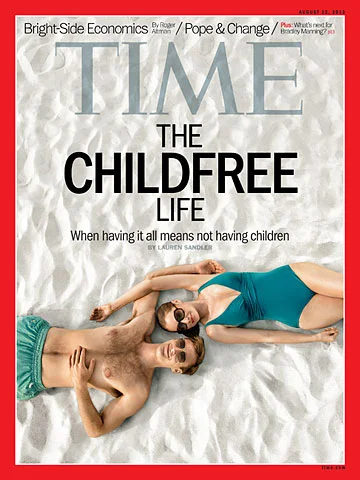
I think what this article gets very wrong is that the mere absence of children does not produce that joy - any more than the presence of children does. The cover image starts making the argument the moment you pick up the magazine. A couple lay relaxing on the beach - smiles and sunglasses firmly in place. The implication is clear. THIS is the lifestyle of the childless. Footloose and fancy free.
One women even states explicitly at the end of the article “We can do anything we want, so why wouldn’t we?”
Really? ANYTHING? I somehow doubt that. Not to mention these people’s lifestyles seem to have as much to do with their income level than their childless stature. Children are expensive. No doubt. However, merely NOT having children doesn’t launch you into the upper-middle class.
My biggest problem with the article goes beyond the cursory treatment of individual choices. My biggest problem is that for a piece on changing societal trends there was no real examination of what the increasing number of childless citizens means for our society. There is a mention of the question most childless men and women get asked about their decision.
“Who is going to take care of you when you’re old?”
However, there is no real time spent on the answer. As an increasing number of baby boomers face end-of-life care decisions and with a large number of those boomers without children, there have been many other articles examining elder care among the childless.
NPR reported on many childless women moving into “Golden Girl” homes. Others report they hope to lean on nieces or nephews. Still other plan on paying for expensive nursing or in home care.
The overall consensus seems to be - we have no idea what’s going to happen.
I’m not arguing that one should have children solely to take care of them as they age. However, familial care is a structure we have all depended for hundreds (if not thousands) of years and we need to have an honest conversation about how that structure will change as more and more people chose not to have children.
In fact, I would like more honest conversation across the board from the pressures parents place on others to join their ranks to the misperceptions childless couples hold about parents and their priorities.
Maybe we can begin the conversation by agreeing there is no one way to "have it all" ... and that we all have fun at the beach.
Have you chosen to have children? Have you chosen to remain child free? How you be more honest about what your choice (or the other side's) really means?




My podcasts


Subscribe to my weekly email


- August 2017
- March 2017
- January 2017
- November 2016
- October 2016
- September 2016
- August 2016
- June 2016
- May 2016
- April 2016
- March 2016
- February 2016
- January 2016
- December 2015
- November 2015
- October 2015
- September 2015
- August 2015
- July 2015
- June 2015
- May 2015
- April 2015
- March 2015
- February 2015
- January 2015
- December 2014
- November 2014
- October 2014
- September 2014
- August 2014
- July 2014
- June 2014
- May 2014
- April 2014
- March 2014
- February 2014
- January 2014
- December 2013
- November 2013
- October 2013
- September 2013
- August 2013
- July 2013
- June 2013
- May 2013
Vivamus pellentesque vitae neque at vestibulum. Donec efficitur mollis dui vel pharetra.