
Am I making my child afraid?

When I was a little girl, I had a poster hanging on the wall next to my bed. The poster was of Minnie Mouse and Daisy Duck sharing a sundae in a 1950s dinner. I was CONVINCED that if I fell asleep facing the poster I would have nightmares, usually involving vampires.
I was afraid of vampires and spiders and ghosts. My father once let me watch Unsolved Mysteries, so I was terrified of being kidnapped. I also remember watching the television movie I Know My First Name Is Steven, based on the real life abduction of Steven Staynor, and being thoroughly traumatized.
I assume that these were normal childhood fears, and I don’t believe I suffer from any long-term consequences. My parents told me there was nothing to be afraid of and in a way they were right. The thing that ended up filling my childhood with scary images and long-term trauma was something no one saw coming.
Of course, now as a parent, I see the scary things that haunt children from a completely different perspective. Neither of my children are particularly fearful. I’ve only seem Amos shake with fear once and that was only over a particularly pesky fly.
However, I wonder if this has made me too complacent in a way. Recently, Griffin has basically had to tell me something was too scary for him.
The first time it was the real world nightmare of the Syrian civil war. I was listening to NPR and a report of the chemical weapons being used on the Syrian people. When Griffin asked me what they were talking about, I explained a bad man far away was using chemicals to hurt people.
“I don’t want to listen to this. I shouldn’t listen to things about people dying.”
I was stung. He was right. I’ve always tried to be honest with him and take a hands off approach in my parenting. However, sometimes I forget I do need to protect him from the scary things in life. The second time we were watching Epic and he informed me that this wasn’t a good kids movie and it was scaring him.
Both times I was left feeling like a bit of a failure. I feel strongly that my job is not to always protect my children but to teach them to protect themselves. I stay calm and encourage them to step into their fears – not away from. Some of this is my own personal fear… of being afraid. Being fearful is the only thing I can’t stomach. If I feel myself pulling back or clenching in fear, I step further into it. I try (although not always successfully) to make decisions out of confidence – not out of fear.
However, I’ve realized that’s more an attitude towards change or new experiences – not an attitude towards all things scary. I’m not running to the theater for every new Saw film, and you wouldn’t catch me at a haunted house. I’m not interested in fear for fear’s sake.
I’m just not sure how to tell the difference when it comes to my kids. How do I teach them to try new things and to recognize fear for the paralyzing and often detrimental emotion it often is without inadvertently giving them more the be afraid of? How do I find the line between fostering independence and fostering fears?
I definitely haven’t discovered the answer and I suspect the line will be different with every child.
As we get closer and closer to the fright fest that is Halloween, I’m wondering how do you deal with your kids’ fears?


Maria Kang and Mommy Body Shaming
You know what the mommy wars needed? A big ole dose of body shaming!
Oh, wait.
Fitness blogger Maria Kang posted the above image on Facebook this week and the image went VIRAL. 16 million views viral. 12,0000 comments viral. People reacted strongly - both in support and in disgust - to the image of Kang in a bikini with her three small children surrounding her under the caption, "What's your excuse?"
The implication is clear. If you have recently given birth or have young children, that is not excuse from being fit (if we're being generous) or thin (if we're not).

You know what the mommy wars needed? A big ole dose of body shaming!
Oh, wait.
Fitness blogger Maria Kang posted the above image on Facebook this week and the image went VIRAL. 16 million views viral. 12,0000 comments viral. People reacted strongly - both in support and in disgust - to the image of Kang in a bikini with her three small children surrounding her under the caption, "What's your excuse?"
The implication is clear. If you have recently given birth or have young children, that is not an excuse from being fit (if we're being generous) or thin (if we're not).
Look, I'm happy for Maria Kang. If physical fitness is a passion of hers and she has the time and resources to pursue that passion, then good for her. However, that IS NOT - and need not - be the reality for most mothers out there.
First of all, what's the dang hurry? I've always been a fan of the phrase "nine months on, nine months off" in regards to dreaded baby weight. That doesn't mean I applied it like a ticking time bomb to my own body. It took some serious time and big changes to my diet to finally lose all my baby weight after Amos and that's ok.
Not to mention, even after I lost that weight, my body sure as heck didn't look like Kang's. For most women, having babies changes their bodies permanently . If you benefit from great genetics or are married to a plastic surgeon, then I'm happy for you (I guess...) but that standard need not and must not apply to us all.
Second of all, our society tells a woman from a very young age that her value is indelibly linked to her appearance. Motherhood used to be the last refuge from those types of expectations. Those of us who had recently reproduced or spent most of our waking hours raising the next generation got a pass.
Well, no longer. Now we're expected to be bikini ready within months (or weeks!). It's bad enough to have that message screaming from every celebrity rag in the checkout aisle. Now, we're expected to take this crap from "average moms" invading our Facebook feed!?!
Enough is enough.
Maria Kang, you're right I don't have an excuse.
Because I don't need a damn excuse.
I want to be happy and healthy and confident and that doesn't have anything to do with what I look like in a bikini.
Time to ignore Maria Kang and support Jade Beall.
Time to ignore Maria Kang and embrace the 4th Trimester Body Project.
Time to embrace the bodies we HAVE - not the bodies others want to look at.
No excuses.
What about you? Did you struggle with your post-baby body?


5 Apps That I Can't Live Without

I use my iPhone for everything. EVERYTHING. I don’t just use it to text or check Facebook or take pictures. I use it to stay organized in basically every area of my life from work to parenting to home organization.
At least once a day, I tell someone about an app I love and what it does. Usually, I am met with shock that they didn’t know this perfect app existed and excitement over what it could do for them.
Then I have to spell said app about five times as they download it on the spot.
I know it seems like technology often makes our lives more complicated but, in my experience, if you can stop being intimidated and stay confident through a learning curve, these apps can make your life much, much easier.
This is my digital brain. Every note, every article, every blog post idea, every school calendar, every event plan, every vacation itinerary. It ALL goes here.
In fact, Evernote is really MUCH more than an app. There is an online version, a desktop version, an iPad app, and iPhone app. They all sync, which means all the information we gather on a daily basis is available to us where ever we are.
Amazing.
Now, you cannot be intimidated. This is a powerful program but it can do as much or as little as you want. All you have to do is start using it! Here’s an a great article to give you an idea of what it can do.
How often as a mom do you think “I need to write this down!”? If you’re like me, a lot. A funny quote, a silly dance, a great question. Kids are full of those little moments we all want to capture.
Now… how often do you actually record those moments?
For a long time, I would post them to Facebook or in a random notebook or in my journal. Then, I realized I would have no way of actually keeping all these digital and analog snippets of my children’s childhood.
Then, I found Moment Garden. Now, all those little moments are in one – secure – place. I can email a moment. Upload a Facebook status or a photo. Each boy has their own “garden” and members of my family get email alerts when I post.
I absolutely love it.
Shared grocery lists, people! Meaning I notice we’ve run out of eggs and my husband knows this when we stops at the store on his way home!!
Do I REALLY need to say anything else?!?
UPDATE: Sadly, Twist is defunct but WAZE has this capability now!
Listen, kids make you run late. It’s just the reality. They are slow. They can’t tie their own shoes. They’re lollygaggers is what I’m trying to say.
Add in traffic of any kind and you’ve got a situation.
Twist is a fantastic app that let’s people know you are on your way. Meeting a play group? Send a twist to the group – don’t worry they don’t need the app! – and Twist will track your GPS and give them updates about when you will arrive.
I love it for when we travel. My mom ALWAYS wants us to text her when we arrive and I ALWAYS forget. Now, I just send twists to all our parents and move on!
Some apps keep your organized. Some apps keep you sane.
Let Ira Glass save your from toddler conversation and entertain, educate, and enlighten you in the process.
BONUS: Not every mom needs this app, but if you are a blogger or work in social media then sign up for Buffer and let it change. your. life. I am obsessed!
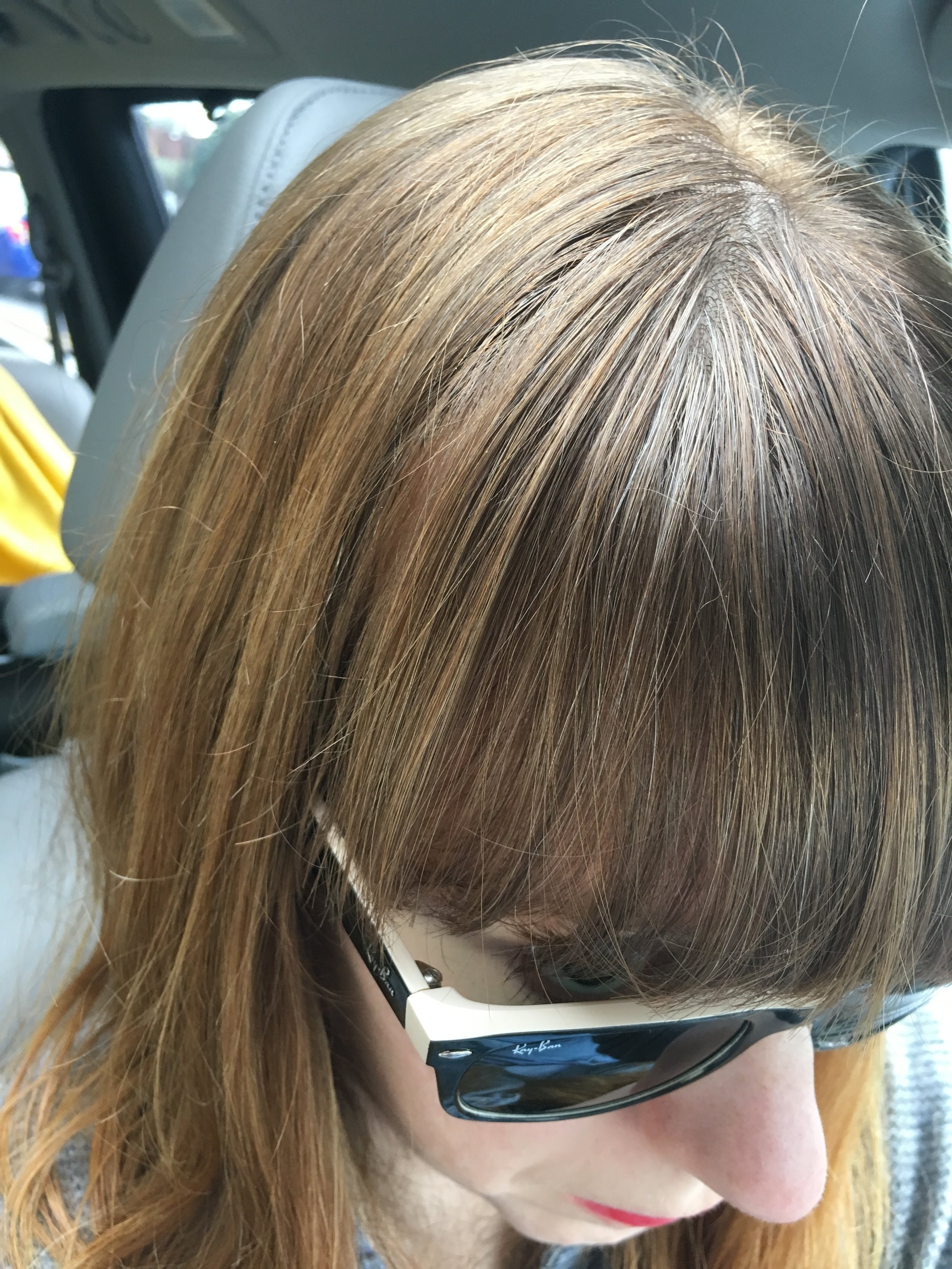


Everything you know about "stranger danger" is wrong! FREE WEBINAR with Safety Expert Pattie Fitzgerald

Last year, I read a post by Checklist Mommy entitled Tricky People Are the New Strangers. In the post, Sarah shares the advice she learned from child safety expert Pattie Fitzgerald on how to protect your children from child predators.
At this point, I had already written my own post about how I believe the emphasis we place on sex offender registries is misplaced. Finally, I had an expert explaining how to place the emphasis on your child and teaching him or her to protect themselves.
In fact, I was so impressed I immediately emailed Pattie and said I wanted to interview her, which I did on Salt & Nectar last year.
When I recently decided to launch bluegrass redhead Webinars, I knew EXACTLY who I wanted for my first expert - Pattie Fitzgerald. Every interaction I've ever had with Pattie has left me impressed and hungering for more. She knows the insides and outs of how children think and how predators prey on that. Her advice is incredibly insightful, useful and easy to follow and I can't WAIT for all of you to meet her.
My Webinar with Pattie will be Thursday, September 12th, at 8pm CST . So, put the kids to bed (or distract them with pizza if you're on the West Coast) and come learn some seriously useful information on how to protect your kids.
The webinar will last approximately an hour and you can listen through your computer or phone. However, there is LIMITED SPACE so REGISTER HERE and RESERVE YOUR SPACE!
The Cost of Childhood

Sometimes I wonder how many kids I would have if money wasn’t a consideration.
As my husband and I contemplate baby #3, it’s our primary concern. Yes, you are sleep-deprived. Yes, they have meltdowns and eventually learn to crawl out of their cribs. Yes, they ruin your furniture. But all the stresses and struggles of raising small children are – generally speaking – temporary.
Before you know it, they are walking and talking and taking the ACT. But they never get cheaper. In fact, quit the opposite. They just get more damn expensive.
Obviously, my family has chosen one of the options The Other Sarah alluded to in her post on the high cost of raising a child. We moved to a smaller market. I am pretty honest about the many motivations behind our move to Paducah – one of which was undoubtedly the lower cost of living.
If I was to estimate the cost of raising Griffin his first year, I would put it at less than half the national average of $27,000. But even with fulltime daycare costing $900 a month instead of $4000, that’s still $11,000.
And again, babies are expensive but teenagers will bleed. you. dry.
So, what is a parent to do?
At the end of the day, it would be irresponsible to ignore financial considerations. Of course, we have to think about daycare costs and insurance premiums and college savings.
However, it can’t be the only thing we consider. The decision to grow your family has to involve more than math. For me, that meant looking down at a teeny tiny Amos when he was only a few hours old and thinking, “This is not my last baby.”
I just knew. I knew it deep down in the deepest part of myself. It was part gut, part heart, part instinct. Our family is not finished and all the scare tactics and statistics can’t convince me otherwise. Everything worth having costs something. Children are no different.
And no – because I know you’re thinking it – it’s not about wanting a girl. If I knew with a 100% certainty our third child would be a boy, I would still want a third baby.
Even with all the ups and downs, I’m still ready to ride this roller coaster one more time … no matter the cost of the ticket.
And tell me - how big of a role did finances play in your own decision to have (or not to have) kids?




Is opting out ever ok?
Ten years ago, the Opt Out Revolution was in full swing. A 60 Minutes feature and a New York Times Magazine cover story reported on a growing number of elite, well-educated women leaving high-powered careers to stay at home full time and raise kids. Pushing strollers for the camera and telling reporters how fulfilling their new lives were, these women were heroes to some and villains to others.
Now, the Opt Out Revolutionaries are back in the news with another New York Times Magazine article entitled “The Opt-Out Generation Wants Back In.” A decade later, many of the women are back in the workforce either due to divorce, economic necessity, or pure preference. After “off-ramping” to raise children, they are now back on the career path only in lesser positions and with lower salaries.
Which raises the question - was opting out a mistake?
The issues surrounding the choice to stay home are as complex and diverse as the women making them. Some simply don’t have a choice and cannot afford day care. Some simply don’t have a choice and cannot afford to stay home. However, for many women, there is a choice.
I walked a weird middle ground with my initial decision to stay home in 2009. On one hand, I had an advanced (and expensive) degree. I had worked in both the high stakes world of presidential campaigns and Congressional politics. After Griffin was born my initial plan was to practice as an attorney, so much so that I took the bar two months after he was born.
On the other hand, my experience in politics was only in low level positions and had little applicability in my new life in Paducah. I wasn’t walking away from some high flying career. I had yet to really choose a career. Instead, it felt like I was just putting my career on hold.
Also, as Griffin grew and then as we added Amos to the fold, I realized how much it meant to me to be with my children. I wanted to be there for every milestone, every moment - not because I thought it was necessarily better for them but for my own selfish reasons. I wanted to enjoy a time in my life that I knew would be over quickly.
Then, as a new and more flexible career began to present itself, a return to full time work seemed less and less likely.
I would never categorize my reasoning - or anyone else’s - as wrong or right. However, I do think this new examination of opting out raises one important issue. An issue that was never really addressed in the initial reporting and that every woman (or man) needs to be very honest about when she choses to stay home. An issue I think about a lot.
Staying home is an incredibly risky decision economically.
The reasons behind staying home or going to work are complex but the impact financially is clear. It costs the woman dearly. When I graduated from law school, I received Leslie Bennetts’s The Feminine Mistake: Are We Giving Up Too Much? Leaving the Mommy Wars to others, Bennetts - an economist - deals strictly with the numbers. Simply put, 95% of women will be alone at some point in their lives, either due to the death of a spouse or divorce. Staying away from the workforce for as little as three years can reduce a woman’s future income by up to 40%. Off-ramping for a decade or more can mean over a million dollars in lost wages.
I think about this all the time. I see my friends who stayed in the workforce and the raises they accrue year after year. I see marriages I thought were stable fall apart. I see families forever changed by tragedy.
I know what I’m doing is risky. I hope the skills and connections I’m building by working part time will serve me well should I ever have to face radical changes in my own life but there is no real way to know.
Ultimately, the economics of my decision were not the only factor I considered. For good or for bad, the emotions of the moment outweighed the cold hard numbers of the future.
Whether or not that was a mistake? Only time will tell.
Tell me. Do the economic risk outweigh the emotional benefits? Should the financial implications even matter?


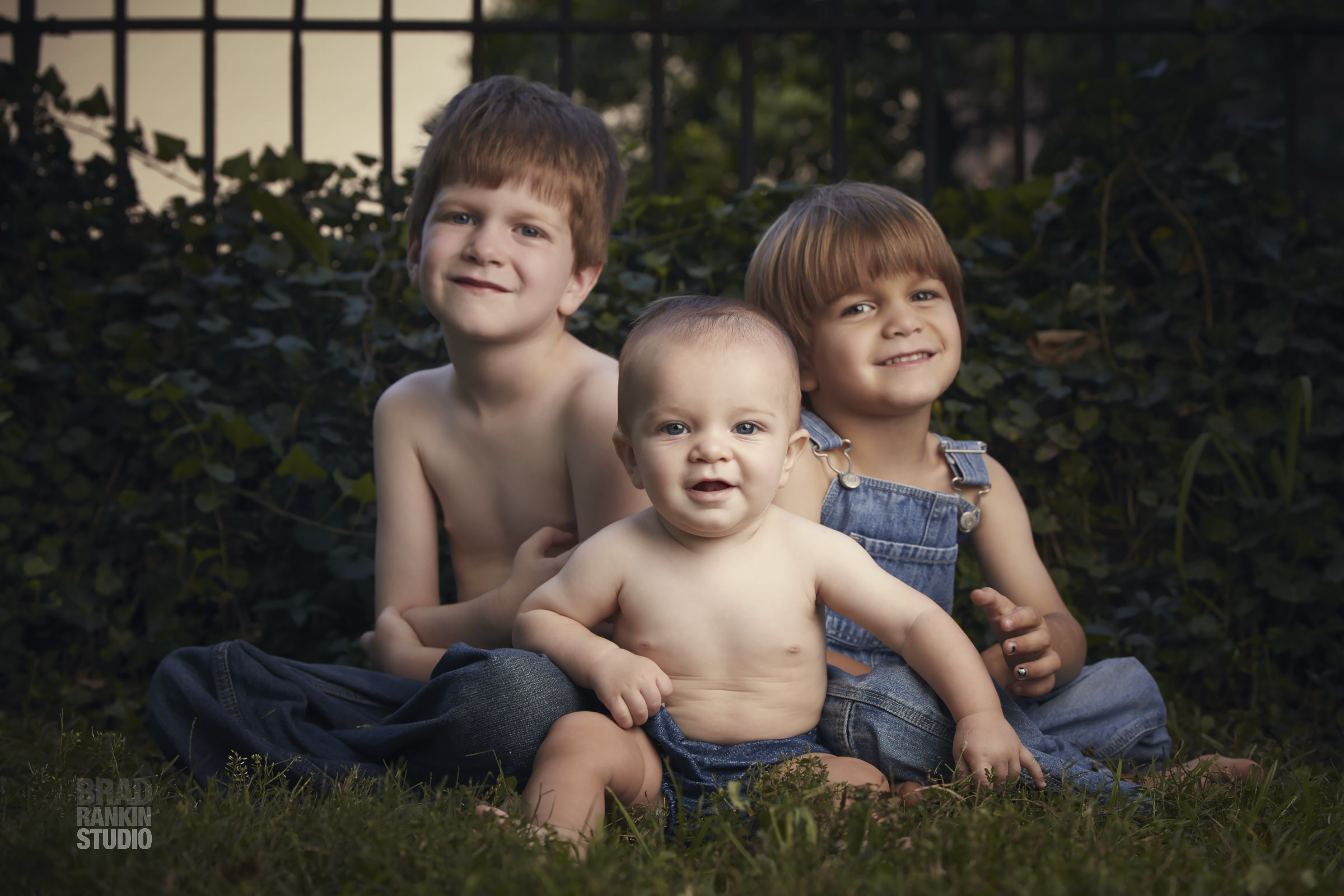



The Pros and Cons of Being Childless
I've invited my dear friend Lydia to share her thoughts on being childless. It felt wrong to invite a discussion and then not share this space with someone who has actually made the decision we're discussing. I've known Lydia for over fifteen years and I knew she would do the topic justice.
When I was a little girl, I don't remember having more than one baby doll. That sole doll was named Drowsy. I didn't carry her around like a baby, I didn't walk her in a play stroller, I didn't play "mom" to her. She was my friend - my pretty tow-headed, pink and white polka-dotted friend.
Eventually I outgrew Drowsy and grew up to be a young woman who claimed with intense conviction that she never wanted children.

Photo Credit: H is for Home via Compfight cc
I've invited my dear friend Lydia to share her thoughts on being childless. It felt wrong to invite a discussion and then not share this space with someone who has actually made the decision we're discussing. I've known Lydia for over fifteen years and I knew she would do the topic justice.
When I was a little girl, I don't remember having more than one baby doll. That sole doll was named Drowsy. I didn't carry her around like a baby, I didn't walk her in a play stroller, I didn't play "mom" to her. She was my friend - my pretty tow-headed, pink and white polka-dotted friend.
Eventually I outgrew Drowsy and grew up to be a young woman who claimed with intense conviction that she never wanted children. It wasn't until my late twenties that a feeling of indifference started manifesting itself regarding the issue. I decided that I didn't care one way or the other - if I met and fell in love with a person who wanted children, then we'd go down that path and either try to have our own children or adopt or foster. If I didn't meet a person with those dreams, then I was more than content to remain child-free. My mom made sure to place some Folic Acid supplements in my Christmas stocking - just in case. You know, as moms do!
As it turns out, I met a man who did not have those dreams and my husband and I are quite happy with our decision to not have children. We have robust lives individually and together - full of hobbies, family, a career and strong opinions about how we want to spend our time. There are many, many reasons for our decision. Just as with any family's decision, it's pretty personal, so I am choosing not to go into the details here. Let me just say that we know ourselves, we know what we want out of life, and we don't regret our decision.
With any decision of such magnitude, there are trade-offs between the good and the bad. I would not say that I am happier than my friends with children by virtue of my decision. The idea that I "have it all" is pretty ludicrous. It is such a subjective idea that there's no way to measure it. For example, to me, Beyonce really seems to have it all - talent, fame, fortune, Blue Ivy, etc.. Basically, we aren't ready for her jelly. However, I do not, at all, want what she has...the paparazzi, the public criticism, the inspection, etc.
It's all about your priorities as to whether or not you "have it all." Just like with success - no one can measure it but you.
With that in mind, though, here's a list of my personal pros to deciding not to have children:
- I am able to wake up at the last possible second in the mornings because I only have to get myself ready for the day.
- I can live my life with a relative lack of scrutiny - basically, the only decision I have to defend is this one of not having children (and it is not one that causes me untold pain, as those intrusive questions can be for others who do not have the luxury of a choice or who have experienced loss of a child) - there aren't a million little scrutinies to bear regarding the conception, gestation, birthing, feeding, rearing, etc. of my children. I don't understand how parents put up with all those judgments.
- My husband and I can take a trip to an adults-only resort in paradise. Yes. That Time Magazine cover photo is a (much) leaner version of us. ONCE in our lives so far have we taken such a trip. On our honeymoon. The takeaway here, though, is that I have many fewer restrictions on my comings-and-goings. We can decide to go wherever we want with only the limitation of vacation time and funds to get there. The same goes with a spur-of-the-moment trip to the movies or out on the town.
- No dirty diapers to change. No nighttime sickness to clean up. Generally, none of the icky stuff that comes along with people unable to care for themselves fully.
- The ability to return a nephew to their parents after being The Most Fun Aunt Ever without having to suffer the consequences of an overly-stimulated child. (I am easily manipulated into more sugar and later bedtimes!)
There are cons, though. I know that.
- There are no pulls at my heartstrings when that first cry, that first word or that first step happen.
- There is not that level of love and affection that only parents can feel for their children (I'd have to mention that there's also not the fear that comes along with it.)
- There are very few pieces of child art to hang on my refrigerator. (I love kid art.)
- My life is now very much different than those of my friends who are in the toddler and young child years with their families. We share the affection of friendship, but I know that we don't understand one another's lives any longer. That makes me sad, but I think it will improve as their children age and become more independent.
- There is a fear that I'll regret this decision one day.
- There is also a fear that my careful planning won't result in my being taken care of and provided for in the golden years of my life. It's a very real fear, but one that I mitigate by telling myself I have a large and loving family.
Like I said, earlier, it's a trade-off. Ultimately, having children was never a priority to me. I'm not sure what influenced that, but I do know that I've had many strong female role models that do not have children. My big Catholic family features three women who chose religious orders for their life. They obviously don't have children. My eldest aunt also doesn't have children - she's always been a beacon of knowledge and talent and wonder for me. She was the adult in the family who treated my cousins and I as adults from a very young age - I loved that! I have another aunt who chose to have a child on her own. That child just graduated college, which makes me feel incredibly old.
With this sort of family surrounding me, I've felt very little pressure to fit into that traditional role of middle-class American womanhood. I'd make a terrible soccer mom, so it's probably a really good thing!
Everyone's story is different, which makes humanity beautiful and wonderful. Raising children, trying to conceive children, adopting children, choosing to remain child-free - all are valid choices for a fulfilled life.
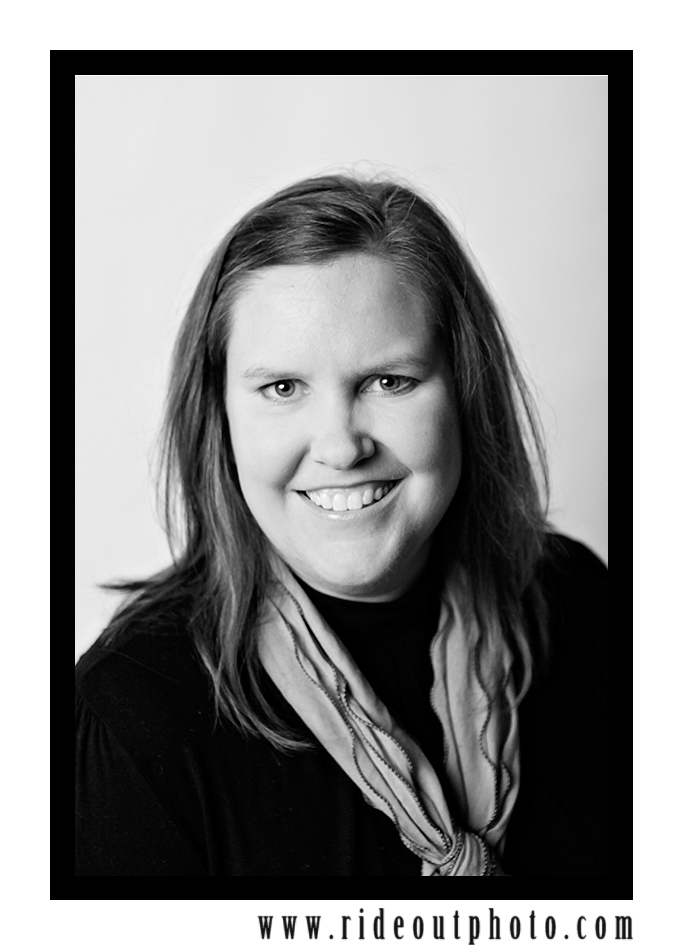
Lydia Powell is a 30-ish woman, married with two spoiled puppies. She enjoys reading, writing and is currently fighting a mean Candy Crush addiction. She is in the process of following her dream of opening her own business - a bookkeeping and accounting firm servicing small businesses.
Do childless people "have it all"?
What happens when having it all means not having children?
This is the question asked by Lauren Sandler in her Time Magazine cover story “The Childfree Life.”
“Having it all” is a phrase that haunts parents – particularly mothers – everywhere. Balancing the demands of family life and a career in order to walk the high wire act of personal fulfillment can seem like an impossible task.
Well, y’all, I’ve got bad news. Stop trying to walk that tightrope because it turns out we shouldn’t have joined the circus to begin with.

I have somehow managed to enjoy the beach both with and without children.
What happens when having it all means not having children?
This is the question asked by Lauren Sandler in her Time Magazine cover story “The Childfree Life.”
“Having it all” is a phrase that haunts parents – particularly mothers – everywhere. Balancing the demands of family life and a career in order to walk the high wire act of personal fulfillment can seem like an impossible task.
Well, y’all, I’ve got bad news. Stop trying to walk that tightrope because it turns out we could have skipped the circus all together.
According the article, an increasing number of men and women are choosing to find personal fulfillment without pursuing parenthood. Between 2007 and 2011, the American fertility rate has decreased 9%. In 1976, one in 10 women ages 40-44 were childless. Today the number is one in 5.
Sandler examines some interesting theories on the decreasing fertility rate from the recession to intelligence. (Spoiler alert! Smart people chose not to have kids apparently.) Whatever the causes, these choices are difficult in a society that promotes family – and motherhood in particular.
Don't get me wrong. I felt real sympathy for many of the women who spoke of how indelibly linked motherhood and womanhood are and how difficult it can be to separate the two.
Women feel so much pressure to reproduce and are questioned more openly about their decisions. (Of course, I’m not sure the article is actually helping address that stereotype when it devotes an entire page to celebrity “non-moms” without giving equal time to famous men who have chosen not to have children.) In particular, one expert argues “women are living in a ‘damned if you do damned if you don’t’ social context in a country that she believes emphasizes self-sufficiency equally alongside a deep commitment to motherhood.”
I remember returning home for my great-grandmother’s funeral mere months after marrying my husband. As I stood in line, one of my high school teachers asked if I was pregnant yet. I remember looking at my watch and informing him I’d only been married a couple of months. I couldn’t believe the pressure to reproduce was already starting.
Nicholas and I waited almost six years to have kids and there were even more questions and inquisitive conversations over that time. However, we married young. I was only 22 and had Griffin at 28. I can’t imagine how intense the pressure would have become had we waited ten years or chosen not to have children at all.
Making a choice that strays from the societal norm is always difficult. For better or for worse, people feel you are judging their choices. They get defensive. It makes them uneasy and they feel the need to explain. I was on the receiving end of those explanations when I chose home birth and have been encountering a similar response when I mention my interest in homeschooling.
Of course, those of us who chose to take a different path can be just a defensive. Many of the people interviewed for the article clearly feel the need to not only defend their choices but attack the choice to have children. One woman states about her childlessness, “I feel like I have to be about it.” I wish we could all acknowledge this "damned if you do damned if you don't" means we are ALL damned - those of us who chose motherhood only to find we're never quite living up to the ideal and those of us who don't chose motherhood and feel constantly judged for their choice.
Listen, parenting is difficult - no doubt. However, the article seems to present parenting only as a long list of demands, frustrations, and missed opportunities. It seems to be an accepted societal truth that parents are miserable. Or so says study after study on quality of life and marital satisfaction among parents. Rufus Griscom and Alisa Vokman, the founders of Babble.com, have a wonderful Ted Talk on parenting in which they explain what studies on happiness are missing when they note childless people have higher marital satisfaction.
Specifically, he uses this graph to show what the researchers are missing with their single gray line.

When we think about parenting - especially parenting small children, the truth is the lows are VERY low but the highs are REALLY amazing.
I always loved the way author Caitlyn Moran described the true joy of raising children in her book How to be a Woman.
Fifteen-thousand-pound bottles of vintage champagne; hot-air balloons flying over wildebeest migrations; sharkskin shoes with a diamond on the sole; Paris: these are all, ultimately, consolation prizes for those who don’t have access to a small, ideally slightly grubby child whom they can mess around with, poke and squash a little—high on ridiculous love.
Now, here is the point where I have to make something incredibly clear lest I be lumped in with the mama mafia in the article.
Children are ABSOLUTELY not the only source of true joy. Anyone arguing otherwise has clearly never heard of Oprah. Life is full of connection and journeys and opportunity that bring real and fulfilling joy to people all over this planet - people who don’t have children.
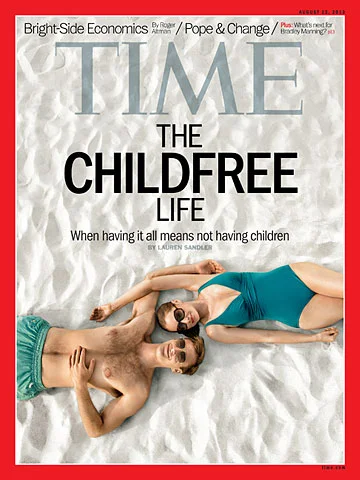
I think what this article gets very wrong is that the mere absence of children does not produce that joy - any more than the presence of children does. The cover image starts making the argument the moment you pick up the magazine. A couple lay relaxing on the beach - smiles and sunglasses firmly in place. The implication is clear. THIS is the lifestyle of the childless. Footloose and fancy free.
One women even states explicitly at the end of the article “We can do anything we want, so why wouldn’t we?”
Really? ANYTHING? I somehow doubt that. Not to mention these people’s lifestyles seem to have as much to do with their income level than their childless stature. Children are expensive. No doubt. However, merely NOT having children doesn’t launch you into the upper-middle class.
My biggest problem with the article goes beyond the cursory treatment of individual choices. My biggest problem is that for a piece on changing societal trends there was no real examination of what the increasing number of childless citizens means for our society. There is a mention of the question most childless men and women get asked about their decision.
“Who is going to take care of you when you’re old?”
However, there is no real time spent on the answer. As an increasing number of baby boomers face end-of-life care decisions and with a large number of those boomers without children, there have been many other articles examining elder care among the childless.
NPR reported on many childless women moving into “Golden Girl” homes. Others report they hope to lean on nieces or nephews. Still other plan on paying for expensive nursing or in home care.
The overall consensus seems to be - we have no idea what’s going to happen.
I’m not arguing that one should have children solely to take care of them as they age. However, familial care is a structure we have all depended for hundreds (if not thousands) of years and we need to have an honest conversation about how that structure will change as more and more people chose not to have children.
In fact, I would like more honest conversation across the board from the pressures parents place on others to join their ranks to the misperceptions childless couples hold about parents and their priorities.
Maybe we can begin the conversation by agreeing there is no one way to "have it all" ... and that we all have fun at the beach.
Have you chosen to have children? Have you chosen to remain child free? How you be more honest about what your choice (or the other side's) really means?

My podcasts


Subscribe to my weekly email

- August 2017
- March 2017
- January 2017
- November 2016
- October 2016
- September 2016
- August 2016
- June 2016
- May 2016
- April 2016
- March 2016
- February 2016
- January 2016
- December 2015
- November 2015
- October 2015
- September 2015
- August 2015
- July 2015
- June 2015
- May 2015
- April 2015
- March 2015
- February 2015
- January 2015
- December 2014
- November 2014
- October 2014
- September 2014
- August 2014
- July 2014
- June 2014
- May 2014
- April 2014
- March 2014
- February 2014
- January 2014
- December 2013
- November 2013
- October 2013
- September 2013
- August 2013
- July 2013
- June 2013
- May 2013
In this series, I’m examining the science of parenting. In Part One, we discussed the the importance of the quality - not quantity - of time we spend with our kids. In Part Two, we looked at the science on what types of activities can be considered quality family time. In Part Three, I look at how our children spend their time, our perception of those activities, and what the science actually says.
Last week, I took the boys to our local park after school. I had just read an editorial making a strong case for free-range parenting. This quote in particular left me wondering if I give my own children enough opportunities to explore.