
Why #TBT and Timehop Are Good For Moms
When it comes to social media fads, I'm a little bit of a party pooper. I won't re-post the graphic that says "Sisters are the best! Share if you also love your sister!" (even though I do, in fact, love my sister). I don't change my profile photo to raise awareness for the cause du jour (even if I support it privately). And when my entire family got in on the #icebucketchallenge, I refused to post a video proving that I poured ice all over my head (which I did do, eventually).
Why?

Ah, the early nineties.
When it comes to social media fads, I'm a little bit of a party pooper. I won't re-post the graphic that says "Sisters are the best! Share if you also love your sister!" (even though I do, in fact, love my sister). I don't change my profile photo to raise awareness for the cause du jour (even if I support it privately). And when my entire family got in on the #icebucketchallenge, I refused to post a video proving that I poured ice all over my head (which I did do, eventually).
Why?
I guess I'm a bit of an online introvert, preferring to watch from the sidelines and post only when I feel really motivated to share something; and I definitely have a streak of trend-aversion in me, making it less and less likely that I'll jump on a bandwagon the bigger the bandwagon gets (I'm looking at you, Serial).
But there's one movement taking social media by storm that is right up my alley: Throwback Thursday (or #TBT).
If this is your first day on the internet (welcome!), Throwback Thursday is a weekly opportunity to dig out tacky high school photographs of yourself and share them with the world. People post old "throwback" pictures on Facebook and Instagram, inviting their real life and online friends to laugh or smile at a virtual quick-trip down memory lane.
And I love it.

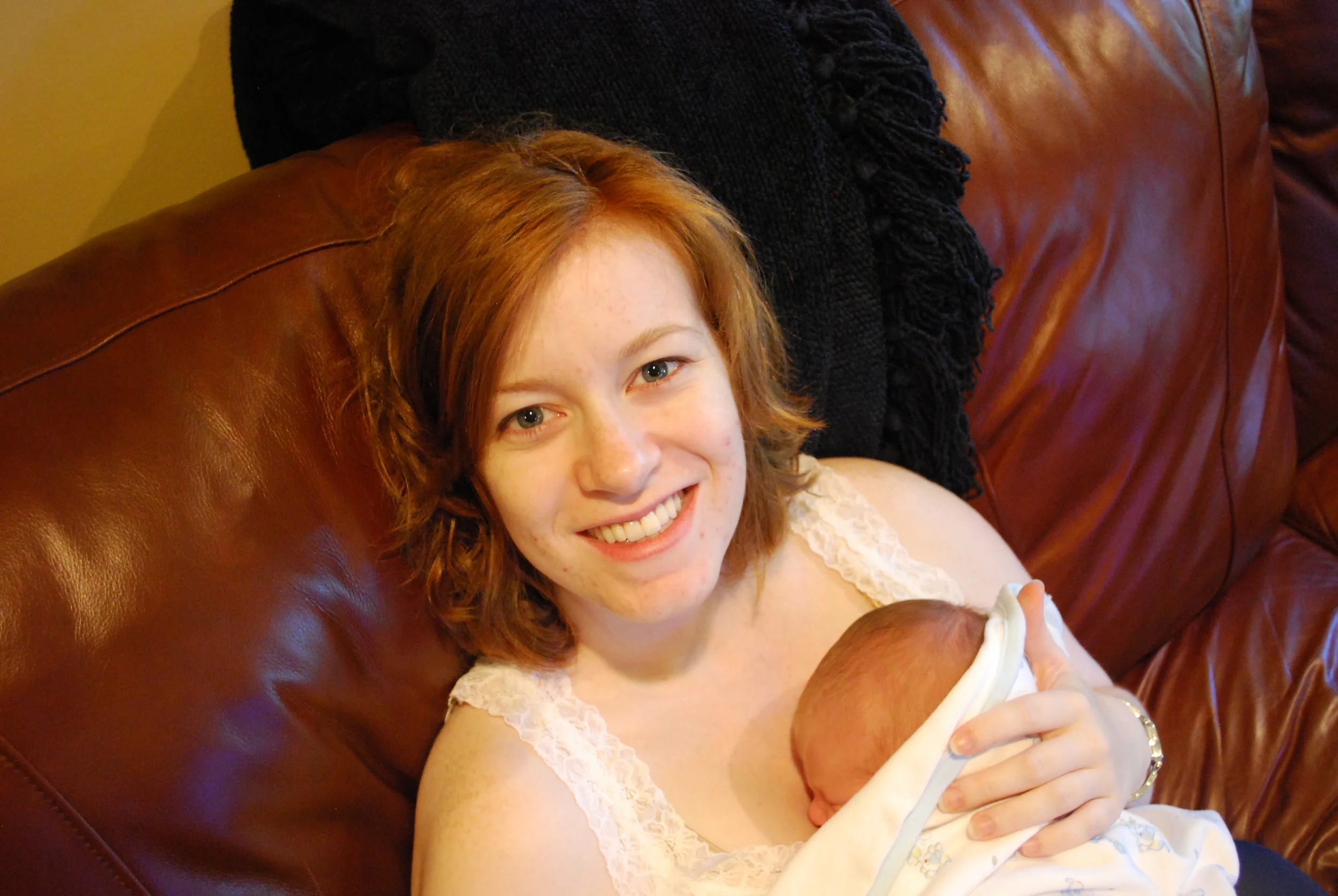
That's me wearing a nursing tank top in public, one of a few mistakes I made in the first few months of motherhood.
I love seeing images of newer friends in their "old" glory days. I love digging up snapshots from my own glory days and surprising my childhood friends with a post tagging them and making us all laugh. And as time whizzes by with increasing speed in my life as a mother of small children, I love looking back at the changes in my own family over the last seven years.
I'm also a big fan of Timehop, an app that gives you a "on this day in history" record of all your social media activity. For those like me who have been Instagramming the heck out of my kids for several years now, it's a great way to get a glimpse of time gone by.

hat baby burrito is a wild and crazy toddler these days.
I think the appeal of #ThrowbackThursday to me is that it pulls our focus out of The Now (yes, I know we're supposed to live in The Now, but hear me out on this one) and reminds us how quickly time passes, how slippery the years get as we slide toward middle age, and how this season of life we're in is just that: a season, one that will look as awkward and poorly outfitted in hindsight as the late 1990s do right now.
Not only is this a trend I'm happy to get behind, I think it's actually a really healthy one for mothers of young kids.
So much of what the internet has to offer is potentially toxic to moms. Let's panic about measles! Look at my Pinterest-perfect craft success! Check out how many calories I burned today! Here's a list of all the things that suck about motherhood! It's easy to get sucked into a game of comparison, self-doubt, and negativity - and it's even easier to forget that the lives behind the avatars we interact with online are more than just what their latest post represents. Looking backward - whether it's 30 years or 3 - forces us to step outside that cycle of online comparison and competition and see the bigger, and often funnier, picture.

File this one under: Shirts That Cannot Be Worn After Age 25
It reminds us that our peers - even the ones who seem to have it all together - have histories too. Histories that include terrible haircuts and wild nights out in college.
It reminds us how quickly time passes. College boyfriends become handsome husbands. Chubby babies become leggy first graders. High school best friends drive minivans and become attorneys.
It connects us to our mothers and our grandmothers, our future grown children and their children. Taking just a second to note the passage of time reminds us how cyclical this life is, and drives home the bittersweet truth that these days are numbered.

My grandparents in 1952
So while you probably won't catch me joining in on the next big social media fad (which lately seems to be making homemade parody videos to Taylor Swift songs?), you can always find me with a smile on my face on Thursdays, throwing it back.

Sarah Powers lives, writes, and wrangles three kids in Southern California. She loves high ponytails, broadway showtunes, and using her kids as an excuse to stay in and go to bed early, which she would do anyway. Find Sarah on Twitter, Instagram and occasionally at her blog, Powers of Mine.


10 Things I Wish I Knew In The NICU

Lucia then

Amelia then
When I was pregnant with my twins in 2009, my Type-A personality kicked in to overdrive and I became obsessed with preparing our lives for these two little creatures. I carefully researched products, joined my local twins club for advice and support, and took a twins preparation class (“Twiniversity 101”). Being the control freak I am, I chose to deliver at the hospital with the best NICU in New York City and I switched to one of the best high-risk obstetrics practices, whereI insisted on weekly monitoring for any signs of preterm labor. I know that twins often come early and I was prepared for that possibility. Or so I thought. When my water broke suddenly at 30 weeks and my doctor informed me that the babies would be arriving imminently, I could not have felt less prepared. I wasn’t ready. I sobbed over and over that THEY weren’t ready. It wasn’t time yet. I held on for five days and then, at barely 31 weeks, my Baby A, Lucia, came roaring out with a bang, almost in the elevator. Baby B, Amelia, was distinctively less gung-ho to leave the warm, cozy womb (understandably) and she ambled out 5 hours and 12 minutes later. (Seventeen months later, this pretty much still says it all about their personalities.) At birth, Lucia weighed 2 pounds 15 ounces and Amelia weighed 3 pounds 6 ounces. Both girls were so tiny and so fragile, barely moving, and all I could think was that they shouldn’t be here yet. So began our NICU journey, which continued for the longest six weeks and two days of my life.
I am part of a wonderful community of mothers of twins (and a few fathers) here in NYC. Most of us had a long, difficult road to parenthood, and far too many of us endured days, weeks, and even months with our newborns confined to plastic incubators in hospital NICUs instead of at home with us. I naturally turned to my fellow twin moms when compiling a list of advice a few months ago for a friend of a friend’s sister (you know how that goes) who had just had preemie twins. The list that follows reflects my own experience in the NICU, along with the input of many of my fellow warrior moms. (We are indeed a special breed of mothers. The first few months of life with preemie twins feels like intense training to a be some sort of ninja warrior mom. Or a special edition of “Survivor: Twins.”)
1. You may not fall instantly in love with your baby/ies. You always imagine that just after your baby is born, the doctor will lay the baby on your chest, you’ll gaze into each others’ eyes, and you’ll immediately be overcome with a powerful love for your new baby. This is not what happens when you give birth to premature or sick babies. The second that baby emerges, there is an army of doctors, nurses, interns, residents, neonatalogists, and other assorted random people in the room who will whisk your baby/ies away before you even have a chance to realize that you’ve just given birth. I didn’t even get a glimpse of my babies until many hours after they were born, and that was only for a couple of minutes. I was not able to hold Lucia until about a week after she was born. Amelia was less stable, so it was even longer before I was permitted to touch her, and I only held her a handful of times during her first month of life. Our emotions were impossibly complicated during those early weeks: We didn’t feel “love” for our babies so much as an overwhelming sense of responsibility; we were in a state of limbo in which our children were “here” but they weren’t really here yet; we had children but we didn’t feel like we were parents yet. If you had asked me during that time if I had any children, I would have hesitated before answering. It wasn’t until Lucia and Amelia were about 8 weeks old that I was able to say “I love you” to them and that I really felt as though I loved them. But once I started, I couldn’t stop! (I’m pretty sure that by the time they are 13 years old and I am still telling them I love them 56 times a day, they are going to be really annoyed.)
2. Pick a primary nurse to care for your baby/ies. After a few days of getting to know the staff, it’s a good idea to pick a couple of nurses who you particularly like and ask the charge nurse that these nurses be assigned to your baby/ies as much as possible. Each nurse has a different style and different ideas about the best way to care for babies. The conflicting information from all of the different nurses about every little thing from the best swaddling technique to proper pacifier size will drive you nuts. Having one or two nurses you know and trust will help your own peace of mind and ensure continuity of care for your baby/ies.
3. You do not have to spend every waking moment in the NICU. The NICU nurses are the best babysitters you will ever have. Take advantage of this time to go out to dinner, see a movie, or get a massage. This is easier said than done when you have a baby or two in the hospital, but it is important to take a little time for yourself while you can. (Full disclosure: I was never able to put this into practice. I spent every waking minute at the hospital, with the exception of New Year’s Eve when I found myself drunkenly sobbing while pumping and dumping in the bathroom stall of crowded bar. But you should learn from me and not do that.)
4. Having your twins come home together is overrated. Twins rarely are released from the hospital on the same day. Baby A usually is a little stronger and is ready to go home before Baby B, who has a few more issues to overcome. (This is a fact and I asked around at the hospital repeatedly but could not for the life of me come up with a medical explanation as to why this is the case.) In our case, Lucia came home over a week before Amelia. When we were told they would not be ready on the same day, I went into a panic at how we would manage to have one baby in the hospital and one at home. It seemed too overwhelming. But after the fact, I think it worked out for the best because we had a little time to figure out how to incorporate one baby into our home before introducing the second one... at which point the complete chaos began and there was no turning back.
5. You absolutely, no question, without a doubt can breastfeed your baby/ies and you can breastfeed exclusively. Breastfeeding premature twins is the hardest thing I have ever done in my life. It is also the best, most rewarding thing I have ever done in my life. I have heard a lot of women say, “My babies were in the NICU so I couldn’t breastfeed,” but having babies in the NICU does not preclude breastfeeding. Right after my girls were born, I requested that a breast pump be brought to my room and that a lactation consultant stop by to help. From day one, I pumped for 20 minutes every 2-3 hours. At first I used the lactation room in the NICU, then I requested the hospital provide me with a pump to keep in my little corner of the NICU. I rented a hospital-grade pump for my home. (The Medela Classic is the best, most powerful pump, followed closely by the Medela Symphony.) I bought a Medela Pump-in-Style totebag and a handpump for my purse to cover any rare moments when I was not at the hospital or at home. I pumped the bejeezus out of my poor, sore, screaming breasts day and night. I drank gallons of water every day. I ate cheeseburgers as much as possible. I produced enough milk for Lucia, Amelia, and a small country. I kept the NICU freezer stocked with my breastmilk at all times and I made sure that every nurse who got anywhere near my babies knew that they were to get only breastmilk in their feeding tubes. I ended up breastfeeding for nine months, exclusively for six. (Once the feeding tubes were out towards the end of the NICU stay, making the transition to nursing was a monstrous challenge. So much so that it is a topic all its own, one for another day.)
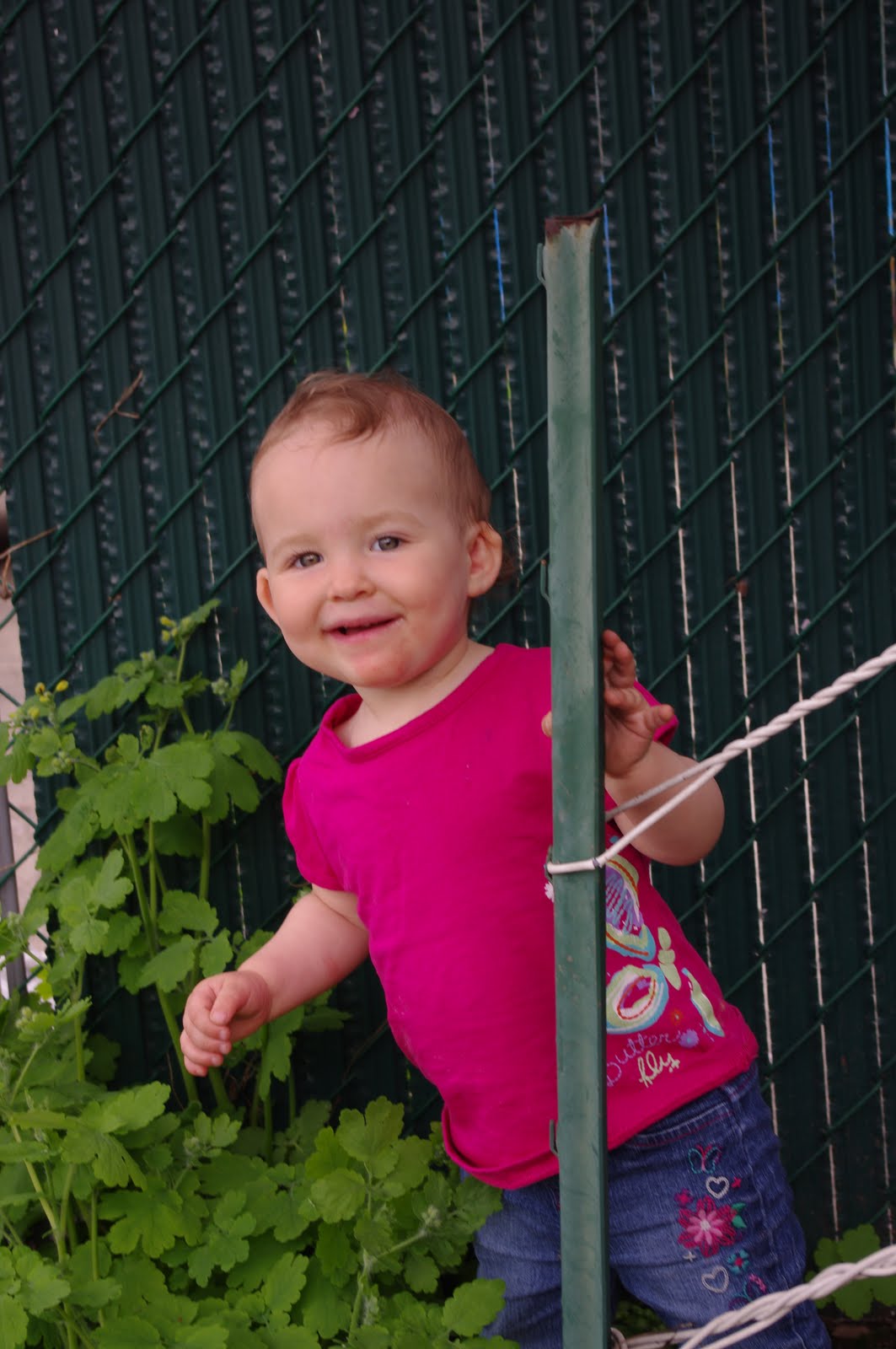
Lucia now
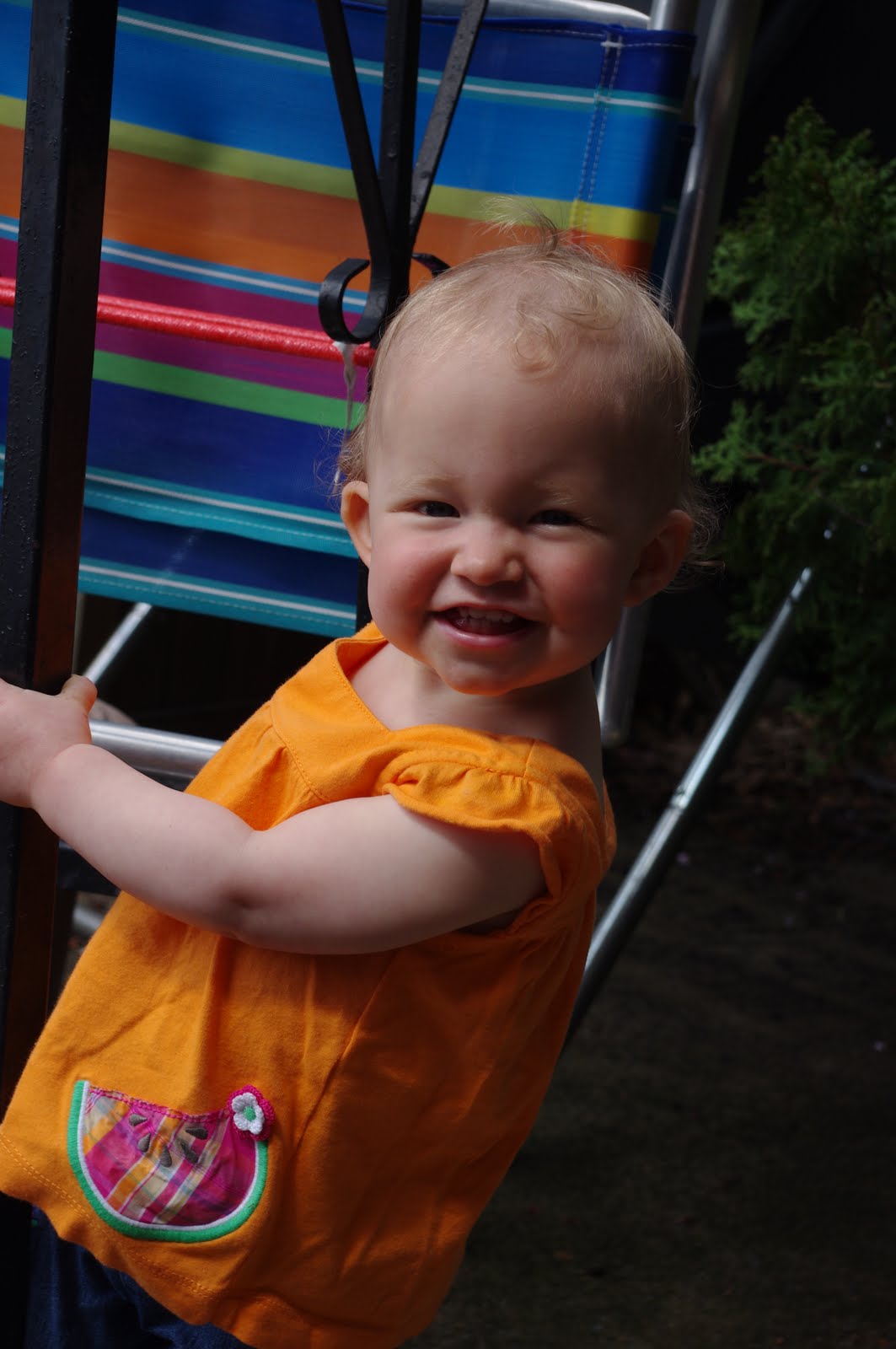
Amelia now
6. Get to know the medical professionals caring for your children and make a point of meeting with them every single day to ask questions, no matter how minor. Introduce yourself to the pediatrician/s assigned to your baby. Introduce yourself to the charge nurse. Get to know the nurses in your area of the NICU. If your NICU is in a teaching hospital, find out what time rounds are and stand next to your baby/ies each day as the interns present to the attending. If you are in a large and crowded NICU, this may be the only way you’ll learn exactly what is going on with your babies and follow their progress. Be ready with questions. Jump in with questions during the presentation if there are words or concepts that you don’t understand. Each morning when you arrive, ask a nurse to notify the pediatrician that you would like to see him/her at some point during the day. If you are not proactive, you may discover that the hospital staff are too busy and overwhelmed with their own work to keep you in the loop.
7. Ask for a tour of the NICU, any materials on premature babies, and to explain all of the instrumentation, monitors and other tubes wires and blinking lights attached to your baby/ies. Days went by before anyone felt the need to explain the 83 different tubes and wires coming out of my babies’ noses and mouths and attached to their little arms, stomachs and feet. Lights would blink and alarms would sound and we had no idea what was going on. About a week after my babies were born, one of the staff members offered to take me on a tour of the NICU. As part of my exit package when we were discharged from the NICU, I was given all sorts of brochures on having premature babies that explained what to expect in the NICU, the terms most commonly used (“ brady,” “apnea,” “desat”... what???), and what all of the different monitors measure and what the numbers all mean. Let me tell you, this would have been helpful BEFORE I was walking out the door of the NICU. I was really irritated.
8. Nurses are the best teachers of newborn care. The one advantage of having babies in the NICU was that by the time they came home from the hospital, we were pros at newborn care and felt totally comfortable taking care of our babies. The NICU nurses have fabulous tips for how to best swaddle, hold, position, comfort, change, burp, bathe, and feed your baby/ies. Learn from them.
9. Do kangaroo care. “Kangaroo care” is when you strip your baby down to its diaper and hold her against your bare chest while resting in a chair or rocker for a couple ofhours or so. Studies have shown that kangaroo care can improve outcomes for premature and sick babies and can shorten the amount of time spent in the NICU. Kangaroo care is trickier than it seems because a nurse has to help you finagle all of the tubes and wires to transfer the baby from the isolette to your chest and then back into the isolette a couple of hours later, and while many nurses will be great advocates for you and happily assist, some nurses just can’t be bothered. I had many more nurses in the “can’t be bothered” camp and I wish I had pushed for more kangaroo care time with my babies.
10. This will all be a distant memory before you know it. I promise.
Allison Harris is a Lawyer Mom with Twins ("LMWT") in New York City and spends an inordinate amount of time corresponding with other twin moms. She recently managed to find the elusive job that offers actual work-life balance, enabling her to put her expensive law school education to good use while also enjoying plenty of time at home with The Ladies, weekend yoga classes, and regular dinners out with other LMWT.
This post originally appeared on Salt & Nectar.






Overwhelmed
When you’re pregnant, the word “excited” comes up about 70 times a day. It’s almost reflexive in conversations.
“You’re pregnant? How exciting!”
“Yes, we’re excited.”
“How far along are you?...You must be excited.”
“It’s a girl! I bet you are so excited.”
“Oh, you’re starting to dilate. EXCITING!”
I’ve been reciting the exciting chorus while struggling with a dark secret: Here, at the halfway point of my second pregnancy, I’m not excited.

Photo Credit: okushnarenko via Compfight cc
When you’re pregnant, the word “excited” comes up about 70 times a day. It’s almost reflexive in conversations.
“You’re pregnant? How exciting!”
“Yes, we’re excited.”
“How far along are you?...You must be excited.”
“It’s a girl! I bet you are so excited.”
“Oh, you’re starting to dilate. EXCITING!”
I’ve been reciting the exciting chorus while struggling with a dark secret: Here, at the halfway point of my second pregnancy, I’m not excited.
For months, I’ve been on the verge of tears at every moment. We are finishing our basement, and, normally, I’d be tearing through Pottery Barn catalogs, pinning color schemes, researching fixtures. I can’t do it. I can’t think. I’m struggling at work. I can’t sleep. I’ve had trouble considering names and haven’t thought about nursery furnishings. I don’t want to leave my house. I don’t want to read. I don’t want to talk about any of it. Even my usually comfortable and comforting yoga practice feels like a stranger. I’m just surviving.
And every mention of excitement adds a layer of guilt.
Maybe it’s that I’ve been through this before, and I know that as wonderful as the baby will be, she will be accompanied by an unmatchable level of fatigue. There will be sweetness and love and joy, yes, but also sitting on frozen peas post-labor, the stress of pumping at work, poop explosions. All of it is worth it (and, you know, blah blah blah—I really wish we could just allow parents space to be honest without the retrospective moralizing. Admitting that it is hard does not diminish my ultimate gratitude for the privilege of parenting)—but all of it is A LOT.
Or maybe it’s that I know adding a child to the family will necessary change our dynamic. Or maybe it’s that I fear the physical uphill climb after the baby is born. Or that I know the next couple of years will be a blur and that it will be very hard to make major changes in our lives for a long while. Whatever it is, it’s paralyzing me emotionally.
I told my mother some of this and expressed my concern that I’m depressed. Mom listened for a few minutes and said, “I don’t think you’re depressed. I think you’re overwhelmed.”
Moms know.
It’s been helpful to have that label, which I think is accurate. It’s also really daunting. “Overwhelmed” is not a word that has come up much for me. I have, in many ways, defined myself by my ability to not feel overwhelmed. I stay calm. I juggle. I keep things in perspective. And now that I’m not doing any of those things, I don’t know what or who I am.
Also? It makes me mad that I feel this way. Objectively, my life is good. I’m blessed with loving people, all that I need and more, meaningful work, great opportunity. People around me suffer real tragedy all the time. It feels wrong and ungrateful, privileged in the worst way to cry because my maternity jeans don’t fit right.
It makes me mad, and it feels cliché, and that makes me madder. Being a hormonal wreck seems so…sitcom-esque. I’m not interested in bringing the mommy mayhem. I want to be She-Who-Has-Her-Stuff-Together-Always. But I decidedly do not have my stuff together today. Now what?
Fortunately, I have a Zen master in my life in the form of my four-year-old daughter.
In our quietest moments together, the ones when I’m fighting tears for no reason at all, she looks at me so intently. She reminds me that I don’t get to just be overwhelmed; I am, intentionally or not, teaching her how to handle being overwhelmed. How do I want her to behave? How do I want her to move forward? More importantly, how do I want her to feel? I don’t know the answers to those questions, except that I want her to accept the emotion. I want her to give herself permission to feel what she feels without judging herself for feeling it.
So, I’m required to model that, which is also overwhelming. I’m trying to just be where I am. That means sometimes allowing myself to sob in the middle of dinner. It means admitting that I need an 8 p.m. bedtime or a nap in the middle of the day or a very long shower or a few hours alone. It means canceling appointments and losing my temper over stupid Internet comments and saying out loud that I feel disrespected or unappreciated or foolish or inadequate. It means asking for help and asking for hugs and asking for Thai takeout because I just can’t face the chicken breasts that I had planned to turn into dinner.
All of this is so painful to me. But as I watch myself do it, I realize it might be the healthiest example I’ve ever set for her. It might mean that when I get past overwhelmed, and I will, I’ll carry a little less pressure to stay calm and juggle and keep perspective. It might mean that I’ll be able to introduce my new daughter to a much more honest version of her mother than has previously existed.
I can find a way to be excited about that.
Beth is a mom, wife, sister, friend, and HR executive. She's also on a journey to become a yoga teacher. She likes watermelon, reality television, and politics.
3 Things To Say To A Teenager Who Is Struggling
Having a grown child and three teenagers at home, it’s safe to say I’ve navigated my share of young adult turmoil. Hearts hurt by friends they trusted. Classes, teams, activities where they are stumbling to keep up. Poor choices that leave them feeling a stranger to themselves. And this constant, exhausting battle between excitement and anxiety for the future.
Through dozens of conversations with my kids over the years, I’ve learned that parents have a unique opportunity - and responsibility, even – to offer balm when their children are hurting. Here are three phrases I have found to be particularly helpful when talking to a teenager who is struggling.
Having a grown child and three teenagers at home, it’s safe to say I’ve navigated my share of young adult turmoil. Hearts hurt by friends they trusted. Classes, teams, activities where they are stumbling to keep up. Poor choices that leave them feeling a stranger to themselves. And this constant, exhausting battle between excitement and anxiety for the future.
Through dozens of conversations with my kids over the years, I’ve learned that parents have a unique opportunity - and responsibility, even – to offer balm when their children are hurting. Here are three phrases I have found to be particularly helpful when talking to a teenager who is struggling.
I know this has been hard for you.
As parents, we carry our own burdens and worries that might make what a teenager deals with seem less significant by comparison. We might even look at our own adolescence and think to ourselves “if they only knew how good they have it.” But when my teenager is struggling, it’s not about me – it’s about her. And sympathy is always my first choice. It costs me nothing to set my ego aside, and I can always offer perspective over time. I find that validating their emotions creates a safe place where my teens can identify and discuss their feelings, and I’ve been surprised at the emotional intelligence they have learned over time because of it.
I believe you can move past this.
When things have been really hard for my kids, I desperately want to tell them “It’ll all be ok.” But, I don’t know that for sure. And if it will be ok, I don’t know how, and I don’t know when. But what I do know is that my teenagers each have the ability and strength to control how they respond to and move beyond their struggles. This belief empowers them to make choices and take steps towards being happy, instead of waiting for it. I have had great opportunities to remind my teenagers of their strengths, and even what they have learned and endured through previous struggles. In doing so, it helps them see all the mental and emotional tools they already have to help them through their current struggle.
This won’t change what I think about you.
Your teenager may never admit this to you, but they crave your good opinion of them. They will probably always take as a given that you love them, but they desperately want to know that you like them, too. This is the one thing that my teenagers have said to me time and again as they’ve stumbled and made mistakes – “I just don’t want you to think any differently of me.” You can’t imagine how humbling it is to hear them be so vulnerable with me. They put their heart in my hands, and with blind trust hope that my faith in them will be sturdy enough to protect it. This one revelation in raising has teens has taught me so much about unconditional love. Because it’s not just about loving, but also hoping for and expecting the best out of people, no matter what.
Though these are the three phrases that have served me (and my teenagers, I believe) well over the years, I know there are many more things a parent can say to offer love and support to a teenager who is struggling.
What would you add to the list?

Stacey Nerdin is a mom of 5 (and soon-to-be-grandma!) living near Portland, OR. She's a book nerd, a tech geek, a nap lover, and an LDS convert. You can find her on Twitter at @StaceyNerdin, or her personal blog, The Scenic Life, where she writes about parenting, entertainment, travel and more.
Felix's Birth Story
The word STORY seems a bit of a stretch for something that took less than two hours but nothing about this child's arrival fit the mold so we'll just go with it.
Let's begin at the beginning. Both of my other births began in the morning after a nice full night's rest. Not this one! I woke up around 12:35 am with a hard belly. I thought maybe I just had to pee but knew it was odd because I almost never have Braxton Hicks contractions in the middle of the night. On the walk back from the bathroom, I realized the hard belly was accompanied by the slightest bit of cramping.
So, I laid down and waited to see if I would have another one. Sure enough, a few minutes later the hard belly made another appearance - this time with WAY more cramping. I decided to download a contraction counter app and call my midwife.
"I can't get out of my driveway," she replied when I told her I was in labor.
The word STORY seems a bit of a stretch for something that took less than two hours but nothing about this child's arrival fit the mold so we'll just go with it.
Let's begin at the beginning. Both of my other births began in the morning after a nice full night's rest. Not this one! I woke up around 12:35 am with a hard belly. I thought maybe I just had to pee but knew it was odd because I almost never have Braxton Hicks contractions in the middle of the night. On the walk back from the bathroom, I realized the hard belly was accompanied by the slightest bit of cramping.
So, I laid down and waited to see if I would have another one. Sure enough, a few minutes later the hard belly made another appearance - this time with WAY more cramping. I decided to download a contraction counter app and call my midwife.
"I can't get out of my driveway," she replied when I told her I was in labor.
Oh, right! I forgot to mention. Our entire area had received historic snowfall the day before and looked like this!

I told her that was fine and that we'd just go to the hospital. For a lot of reasons, I really wasn't that upset about not having a third home birth. I love my doctor who took amazing care of me during the loss of our baby. Also, due to that loss, there was a much bigger fear factor going in to this pregnancy - probably bigger than I had even admitted to myself. Not big enough that I would have volunteered for a hospital birth mind you but big enough I hadn't constructed a complete mental block to one either. Plus, with all the snow, I knew it was a real possibility and had been mentally preparing for a trip to labor and delivery.
ACTUALLY preparing, however, was another story.
Once I realized I had absolutely no clue what to do before you go to the hospital to give birth, I called one of my best friends who has had four natural hospital births. Alas, she didn't answer. So, I called my friend Annie, who had planned to come to town for the birth. She DID answer but was snowed in as well.
She asked if she should just text with Nicholas the rest of the time.
"Well, I haven't actually woken him up yet," I responded.
I think I knew once I got up and started moving around things were going to get REAL real fast. (Spoiler: I was right!) So, I laid there a few minutes more and searched Pinterest for hospital bag packing lists. Yes, I'm serious.
Finally, around 1 am, I went into the den where Nicholas was sleeping on the couch and said in a soft voice.
"Nicholas Holland. Guess who has two thumbs and is in labor?!?"
He sat up startled and guessed correctly!
I told him we needed to pack a bag and call my parents. Both of our cars were still snowed in and we would need my stepfather to drive us to the hospital. Luckily, we remembered our other two children sleeping peacefully and called my neighbor (shout out to MVP neighbors Kate and Tish who answered middle of the night calls for help!!!) to come sit with them.
I called my doctor and told her I was in labor. I also politely accused her witchcraft since she had predicted the baby would be born at 39 weeks and 2 days and I woke up at 12:30 am at 39 weeks and 2 days IN LABOR! She told me she'd meet me at the hospital but she had surgery at 7:45 am. I told her not to worry we'd be done by then.
We got our bag packed (After Nicholas exclaimed "I need a list!" and I offered up my previous Pinterest search.) and headed out the door.
By this time, my contractions were basically doubling in intensity and the breaks in between were shortening dramatically. As a result, everyone was getting on my damn nerves. My family chatted in car on the way to the hospital like we were going to a stinking cocktail party.
I finally screamed (lovingly) NO TALKING.
We got to the hospital and went to the wrong entrance (because HELLO! we had no idea where we were going!). They offered me a wheelchair but I walked to labor and delivery, which I'm sure helped things progress even faster than they already were. We walked through the doors and they had me sign a paper. Nicholas told them this was our first time at the hospital but that we had had two home births. Then, I had to go to the room by myself and assure the nurses I was not being domestically abused, using hard drugs, or had suffered any miscarriages.
Once Nicholas and my mom got back in the room, I relaxed a small amount and had the fleeting thought that I could actually get an epidural if I wanted one. I couldn't seem to get in front of the contractions and I couldn't get comfortable and I wasn't sure how long I would last like this.
About that time my water broke and I realized I was going to have this baby in a manner of minutes - not hours as I had originally thought.
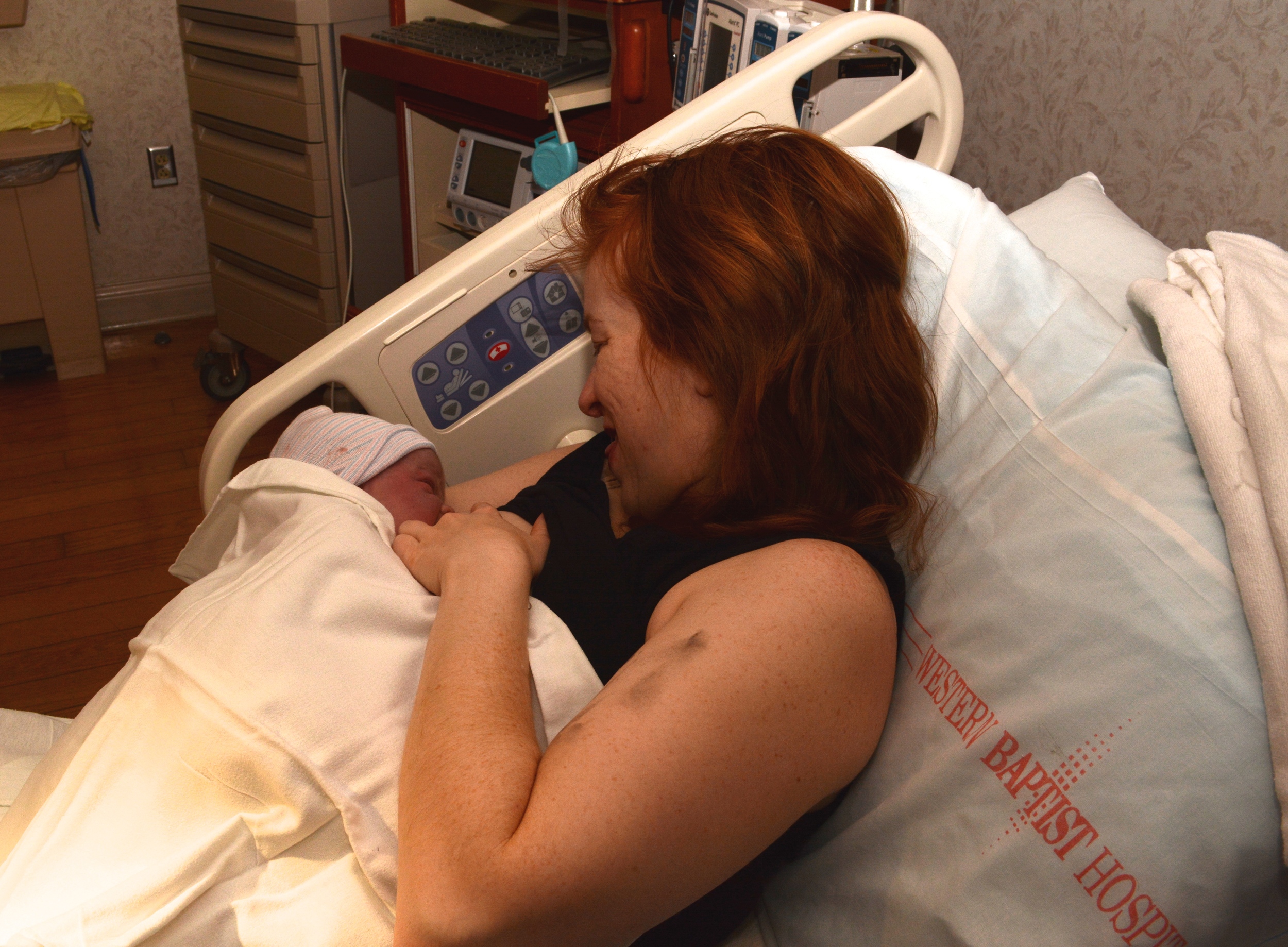
There was meconium in my fluid so they had to call in a NICU team to make sure the baby didn't aspirate any of the fluid. Then, they said they wanted to hook me up to a fetal monitor. I politely declined.
They checked the baby's heart rate and then checked me.
I was 8/9 cm dilated and fully effaced.
For those of you not versed in labor lingo, that translates roughly to PARTY TIME!
The nurses then told me my doctor was still 10 minutes away and to breathe through any desire to push. If I'd had the strength, I would have laughed in their faces. There is no stopping the barreling train that is a 9 pound baby, y'all. It's that simple.
So, I started to push, which is the exact moment I realized that one of the nurses WAS TRYING TO INSERT AN IV IN TO MY ARM AS MY BABY'S HEAD WAS CROWNING.
I started yelling, "Please stop! I cannot handle that right now you have to stop!"
I had the IV (and a lot of bruising) so I can only assume she did not. Fortunately, there's really only one thing you can focus on as your baby is exiting your body and it ain't a pushy nurse with an IV.
Two pushes later and Felix Robert Holland arrived at 3:02 am - approximately 17 minutes after we arrived at the hospital. He weighed 9 lbs and 6 oz and was 21.25 inches long.
They immediately assured us that he didn't aspirate any meconium and was doing great as he cried his little heart out.
My doctor arrived minutes later pointing to her shoes and exclaiming, "I didn't even lace my shoes!"
I delivered my placenta (after refusing help from my doctor and a nurse offering pitocin) and then asked my doctor when I could go home. She said after the baby was cleared by the pediatrician we were free to go and she'd tell the nurses to start prepping all the Against Medical Advice waivers I'd have to sign to bust out of the joint.
My main nurse Emily was really lovely - although thrown a little by many of my requests. First, I refused to let the baby leave the room and asked that his little baby checkups be done while I was holding him.
Then, I asked to take a shower to which she responded, "I don't know if it even works! Most people can't walk because of the epidural!" I told her I felt gross and could walk and needed a shower. She asked a ton of questions about my previous home births and midwife. I also asked for the head nurse who actually delivered Felix to come back so I could thank her. It just felt strange after treating my midwife like part of the family for years to not have had at least a conversation with her.
Around 7 am the pediatrician finally arrived. He is one of the longest practicing pediatricians in our area and has great - if not a bit stern - reputation. He advised me that while he didn't recommend leaving the hospital, the baby looked healthy and it was fine to do so as long as we saw my pediatrician within 24 hours.
So, around 8 am, we loaded up our beautiful baby boy and headed for my mother's house where we spent the next week snowed in (good timing after all, Felix!) and recovering.
Naming It
It’s been a long, messy process, but I’ve finally learned to read some of my own cues. When something is bothering me, for instance, I tend to consume food and drink straight from the container. The quantities aren’t excessive, but it’s definitely not normal.
So when, in December of 2013, I found myself leaning against the kitchen sink and staring at a blank wall, a bag of chip crumbs in one hand and a nearly-empty bottle of pinot noir from the previous week in the other, I was surprised.
What was there to be upset about? We had just gotten Collin’s diagnosis. The one we had been pursuing for almost five years. Hooray. Right?

It’s been a long, messy process, but I’ve finally learned to read some of my own cues. When something is bothering me, for instance, I tend to consume food and drink straight from the container. The quantities aren’t excessive, but it’s definitely not normal.
So when, in December of 2013, I found myself leaning against the kitchen sink and staring at a blank wall, a bag of chip crumbs in one hand and a nearly-empty bottle of pinot noir from the previous week in the other, I was surprised.
What was there to be upset about? We had just gotten Collin’s diagnosis. The one we had been pursuing for almost five years. Hooray. Right?
Then why had I taken the phone call from the geneticist in the closet? And why hadn’t I shared the news with my visiting family? And why did I keep hugging Collin until he squirmed?
It wasn’t a particularly tragic diagnosis: not progressive, not life threatening in the direct sense. I knew parents facing infinitely worse. In fact, the diagnosis didn’t tell us a single thing we didn’t already know about Collin other than which of his genes has the quirk. With fewer than 10 children with the same syndrome in all of the published literature at that time, there wasn’t even a clear picture yet of what the condition entailed.
What the diagnosis did do was give us a name. Wiedemann-Steiner Syndrome.
And what I realized was that I didn’t want to name my son anything other than Collin.
* * *
I had become very used to Collin’s mysterious nature by that time. We knew virtually nothing about the origin of his various disabilities, and I was okay with that. So having these tethered names for him to take as his own was more unsettling than relieving. Who was this Wiedemann? This Steiner? What did they know of my miraculous son, who defies classification?
They felt like intruders in our household, those names. What would they do, now that they wouldn’t be leaving? Toy with our expectations? Tease us about our hopes? Plant some small, dark dread?
Once I had the chance to think through my reaction to the news, I realized that there were two main reasons I was resisting the naming of “it”:
First, I had latched onto the open-endedness of Collin’s situation as a reason for hope. Without a name, there was no concrete “it”. With no other cases to look at, no one besides Collin himself could show us his potential. It kept me from dreading the future, because I could say honestly that I had no idea what it might bring.
And second, I had come to take comfort in our isolation. It was my normal. What would it mean to be part of a group of people, some with older children who might show us a shadow of Collin’s future? Or, maybe worse, with children Collin’s age or younger with significantly milder symptoms?
On the phone, the geneticist had called the diagnosis a breakthrough. But as I stood there alone in the kitchen while Collin laid waiting for me contentedly in his bedroom, I had to wonder: A breakthrough to what?
* * *
Since the beginning of Collin’s life, my husband and I have had a credo we repeat to each other whenever we face an unwelcome revelation: Collin is the same as he was yesterday. Which, translated, means: Nothing has really changed; now we just know more. That night in the kitchen, I repeated it to myself.
And – eventually – I realized that it was true. Even though we had named his genetic anomaly, nothing had changed about Collin. I didn’t have to fear what other Wiedemann-Steiner kids might show me about my own child. Even within this very specific group, only Collin could show me what would unfold for him.
Even though I have yet to meet any other parents of children with Wiedemann-Steiner Syndrome, the diagnosis also makes me part of a community. In the early days, I used to feel jealous of the parents of children with Down Syndrome because of the amazing, family-like group that welcomed young parents, offering support and guidance. But now I’m a member of the Rare Disease community: a group of parents alike in their rarity. Who understand what it’s like to know more about your child’s condition than his or her doctors. Who find companionship among others living nearly impossible odds every day.
I have come to see Collin’s diagnosis – just like his therapies and health care professionals and specialized equipment – as a resource. A tool. It’s a handle I can grab onto when someone asks.
My son has a rare genetic disorder called Wiedemann-Steiner Syndrome, I can say.
His name is Collin.

Annie Kratzsch is a mom, advocate, knitter, and reader. She writes about the struggle and joy of living a full life while raising a child with rare disease and disability at This Rare Day.
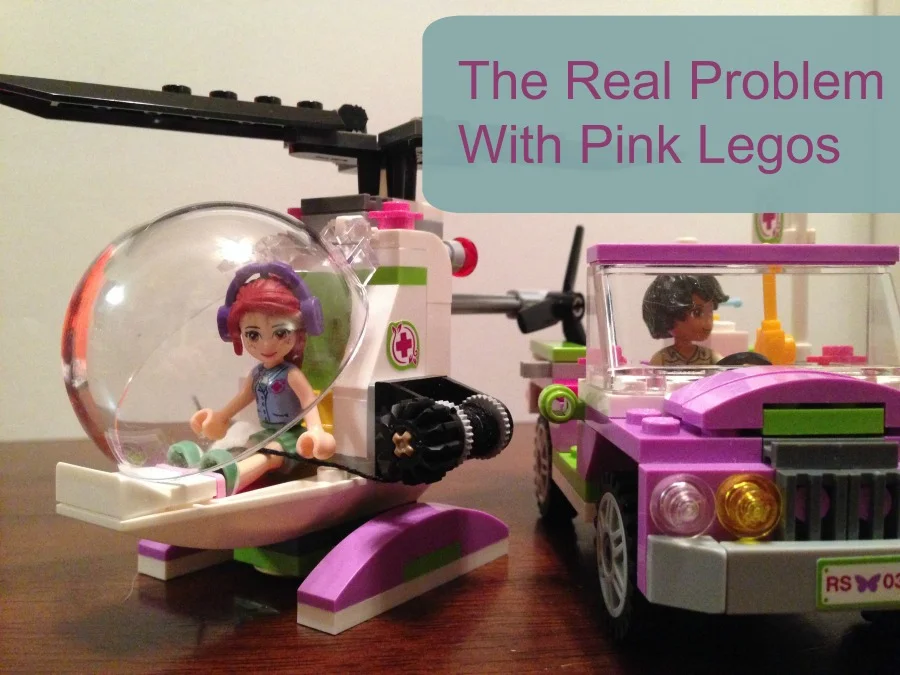
The Real Problem With Pink Legos
My daughter turned four at the beginning of February. She’s interested in building things, pretend play, super heroes, and animals. Between those interests and the twin gift-giving holidays of her birthday and Christmas, my partner and I have had a lot of conversations about Legos in the last couple of months.
My daughter turned four at the beginning of February. She’s interested in building things, pretend play, super heroes, and animals. Between those interests and the twin gift-giving holidays of her birthday and Christmas, my partner and I have had a lot of conversations about Legos in the last couple of months.
We try to be a household with a wide expression of the gender continuum. Although he works in an office and I stay home to be with our daughter and prepare our food, we pretty evenly divide everything else. He wears his hair long and I wear mine short. We both use the power tools, we both work on the cars, we both know how to sew and how to draw. We encourage our daughter to try everything, climb everything, say what she means, express her feelings and follow her interests into whatever subjects she’s curious about.
So even though our daughter’s favorite color is purple, buying the box of Legos that came in pink and purple still gave me pause. I dislike marketing that is aimed solely at girls (or women, for that matter). It feels limiting, distracting. “Here are the toys for you, little girl. Leave those other ones for the boys.” Even the hint of that message being aimed at my strong, smart and impressionable daughter makes my inner feminist mama bear come out snarling. The girl-targeted sets start to look like a soft and floral fantasy world where girls can play with cute little bunnies, in contrast to the more realistic world presented for the boys.
And yet… Many of the “regular” Lego lines also include weapons, or figures with unnecessarily scary faces. And I haven’t found many that include female figures. Or animals. The superhero sets are predominately male figures except for a couple of of bad-guy females (which admittedly is a larger issue with equal gender representation in the superhero world - this article delves further into that issue). The Lego Junior Fire Emergency set? All male figures. The Knight’s Castle? All male. Even when they could have easily put a princess in there, still all male.
But the sets that come in pink - The Pony Farm, The Beach Trip, The Princess Play Castle - those don’t have any male figures. There are no pink firehouses or police stations with female figures. In the pastel-heavy Friends line, there is a Vet Clinic, a Hair Salon, a Cat Walk (!!), a Juice Bar and a Farm. All of these have female figures, but not male. But they do have animals.
We weren’t the only ones talking about this issue this winter. I saw this cartoon in my Facebook feed at least 3 times in the month of December and it sparked debates in the comments each time. Back in 2013, a letter to Lego from a 7-year-old girl in the UK went viral. She had noticed the male/female figure issue and it bothered her.
“I don’t like that there are more Lego boy people and barely any Lego girls...I want you to make more Lego girl people and let them go on adventures and have fun. OK!??”
I eventually realized that my real issue with Lego sets marketed separately for boys and girls was that it was doing a disservice not just to the girls, but to the boys, too.
Kids learn from what they see. When girls see male figures (but not female) in fire station sets and female figures (but not male) at the hair salon, they are given the message that fire stations are where men belong and the hair salon is where women belong.
And the boys are getting that message, too.
Our girls need to see women in a variety of professional (and strong fantasy character) roles. And so do our boys. It is still a fact of our culture that there are more men in positions of power - politics, management, the courtroom - than there are women. They are the ones making the rules. Things are changing toward more equality, and I’ve seen that shift in my lifetime. But we need our children - the girls, but especially the boys - to see more equality so they will create more equality. Women should keep fighting for those rights, but men also need to stand up for it for it to become a reality.
My ex was a foreman (“fore-PERSON” she would say) in a local sheet metal worker’s union. She installed gutters, flashing, metal siding and metal roofing materials. Most of her day was spent on a roof or a tall ladder. There were one or two other women in her local, but they worked in HVAC, not on the roof. None of them were in leadership positions. Almost every week she would come home with a new story about the subtle but pervasive gender bias she ran into in her job. Job sites with no women’s toilet. Forms where all the pronouns were “he/his.” Jokes about her period or her sexuality. Rumors that she’d lost out on good job calls because the superintendent didn’t think she was strong enough (she was).
Would those superintendents have had a different perspective if they’d played with Lego builder sets with female figures? I don’t know. I hope so. Would there be more female firefighters if kids got play with fire station sets that came with female figures, so little girls had the aspiration to get trained and little boys grew up to hire them, and maybe work for them? I hope so.
The bottom line is that Legos are good toys. They foster engineering skills, creative play, and imagination. They strengthen tiny finger muscles and increase eye-hand coordination. I think Lego is misguided in their current marketing, but I don’t want to boycott their toys entirely for those decisions.
So this is what we did for our daughter. We chose a couple of sets that appealed to our daughter’s general interests. We chose a Lego Junior Fire Emergency set, because she’s very interested in helping people and animals in need, and a Lego Friends Jungle Bridge Rescue set, because it has vehicle like her dad’s Jeep and a helicopter like the one he trained with recently for his search and rescue team. This also happens to be the only Friends set that includes a male figure and the box depicts Mia, the female figure, flying the helicopter. We also got a huge Lego Technic Remote-Controlled Wheel Loader to build over several months with her dad because construction sites fascinate her and because he’s an engineer and can teach her all about those motors.
And we bought some ponytail hair pieces to turn one of those firefighters into a girl.
What do you think of Lego's girl-targeted sets? Would you buy them for your girl?
Great discussion happening on Facebook!

Doña Bumgarner blogs about creative self care and mindful mothering at Nurtured Mama. She lives on the Central Coast of California with her partner, their 4-year-old and a collection of cats and chickens and gender-neutral building blocks.

There will come a day.

Darlene's three sons before they were grown men.
It was the kind of summer in Kentucky when the hot August day dies at the hands of its own heat and humidity. A sticky, sweaty two-year-old boy was nestled in the ring of a bathtub baby holder (no doubt long since designated as a death trap like so many other devices we were using in 1981) and I was plopped on the cool tile next to him. I distinctly remember thinking: I will be doing this for the rest of my life. Little did I know that within the next three years I would have two more boys placing me securely in what Sarah and I have termed THE MOB (mothers of boys).
Now I’m a capable thinker and I knew in my MIND that I wouldn’t be doing that the rest of my life but at the time I couldn’t see past the long daily and rigorous chores of taking care of a two-year-old. HAD I known then that within the blink of what seemed like only a few more southern summers, I would be sitting next to a 33-year-old attorney with a high school, college, and post graduate career behind him I would have no doubt been more “in the moment” as the much maligned mantra proposes.
I’m filling in today for my sweet young friend, Sarah, who is in the throes (perhaps literally) of delivering her third boy into the world. There may come a day when she is surrounded by three little boys, ALL uncontrollably and inconsolably screaming at the same time, and think: this will never end.
But there will come a day.
There will be a day when the bake sales are behind you, the diapers are done with, the tears are more like mild traumas, the bikes are replaced by a banged-up VW Beetle, and the “what am I going to do with them!” translates to “what am I going to do without them?”
As one of my favorite author/mom types (Anna Quindlen) wrote some years ago, “It’s not simply the loss of these particular people, living here day in, day out, the bickering, the inside jokes, the cereal bowls in the sink and the towels in the hamper—all right, on the floor. It was who I was with them: the general to their battalion, the president to their cabinet.”
When we inhabit motherhood we become someone new. When we hit the teenage years we become someone we may not like. When they leave us on our own, we become someone who feels loss but gains friends.
Yeah, I know once a mom, always a mom. But there is a new joy in creating a relationship with your children that is based on a mutual history and perhaps a newfound respect.
So young moms of the world, there WILL come a day when your full house morphs into an empty nest but believe me— the trip in between is SUCH a great ride!

Darlene Mazzone is a parent, publisher, and country girl in city shoes. She's the mother of three grown men and is the Executive Editor of PADUCAH LIFE Magazine, a feature magazine in Paducah, KY. She was the first healthcare public relations professional in West Kentucky, is in love with screenwriter Aaron Sorkin (it's OK, her husband knows all about it) and loves pasta, English novels, and of course, reruns of West Wing.
My podcasts


Subscribe to my weekly email


- August 2017
- March 2017
- January 2017
- November 2016
- October 2016
- September 2016
- August 2016
- June 2016
- May 2016
- April 2016
- March 2016
- February 2016
- January 2016
- December 2015
- November 2015
- October 2015
- September 2015
- August 2015
- July 2015
- June 2015
- May 2015
- April 2015
- March 2015
- February 2015
- January 2015
- December 2014
- November 2014
- October 2014
- September 2014
- August 2014
- July 2014
- June 2014
- May 2014
- April 2014
- March 2014
- February 2014
- January 2014
- December 2013
- November 2013
- October 2013
- September 2013
- August 2013
- July 2013
- June 2013
- May 2013