
The science of parenting: What does "quality time" mean?
In part one of this series, I discussed a recent study that found increased maternal time was not necessary for happy kids. In fact, it was the quality of time - not quantity of time that counts. In this post, I ask what does the science say about quality time?
I'll never forget a conversation I once had with a close friend about being a work-at-home mom. She was bemoaning the hours she spent during a recent snow day keeping her kids entertained by playing My Little Ponies.
I was sympathetic to her plight but told her I couldn't really commiserate.
"I don't really play with my kids," I told her.

In part one of this series, I discussed a recent study that found increased maternal time was not necessary for happy kids. In fact, it was the quality of time - not quantity of time that counts. In this post, I ask what does the science say about quality time?
I'll never forget a conversation I once had with a close friend about being a work-at-home mom. She was bemoaning the hours she spent during a recent snow day keeping her kids entertained by playing My Little Ponies.
I was sympathetic to her plight but told her I couldn't really commiserate.
"I don't really play with my kids," I told her.
She was shocked and asked why I didn’t feel guilty for not playing with my children since I was home all day. I told that I read books obviously and played the occasional game of Candyland but, overall, I expected them to entertain themselves.
Truthfully, I have never carried a lot of guilt about constantly playing with my kids. Before I ever became a mom, I read an article arguing that parental play was unnecessary and often detrimental. Kids need time to engage in their own forms of creative play and often adults over-direct, over-instruct, and plain old get in the way.
After all, the idea of "playing" with your kids is a recent invention. My mother didn't spend hours playing with me. As an only child, I spent hours playing by myself. My mother never EVER felt pressure to entertain or constantly engage with me.
If I told her I was bored, I got the same response she got from her mom and the same response my grandmother had received from my great-grandmother.
"Only boring people are bored."
That or she helpfully suggested I could clean the stove.
My family spent quality time together, but it was not always on MY terms. For some reason, time together as a family has now come to mean time together entertaining the children.
In her phenomenal book All Joy and No Fun: The Paradox of Modern Parenting, Jennifer Senior speaks to this new intensive model of parenting.
“ The way most historians describe this transformation is to say that the child went from “useful” to “protected.” But the sociologist Viviana Zelizer came up with a far more pungent phrase. She characterized the modern child as “economically worthless but emotionally priceless.” Today parents pour more capital—both emotional and literal—into their children than ever before, and they’re spending longer, more concentrated hours with their children than they did when the workday ended at five o’clock and the majority of women still stayed home. Yet parents don’t know what it is they’re supposed to do, precisely, in their new jobs. “Parenting” may have become its own activity (its own profession, so to speak), but its goals are far from clear.” ”
It makes sense on a certain level. If our goal is to raise happy, healthy children then let's do whatever makes them happy. Let's play Legos for hours. Let's fill every moment of our free time with birthday parties and bounce houses and extracurricular activities.
Though our hearts might be in the right place, this intensive form of parental interaction which begins with lots of play time and so often becomes helicopter parenting isn't good for anyone.
A recent survey of college freshmen with self-described helicopter parents was found to be less capable of dealing with real world problems. The study found, “Students with helicopter parents tended to be less open to new ideas and actions, as well as more vulnerable, anxious and self-consciousness, among other factors, compared with their counterparts with more distant parents.”
So, what does the science say about positive forms of quality time?
As we all re-arrange our lives and schedules to fit the demands of our “economically worthless but emotionally priceless” children, one form of scientifically-proven quality time has suffered.
Unfortunately, the family dinner has become rare just as the science on family dinners has become more and more conclusive. Kids who eat with their families three or more times a week are less likely to be overweight, perform better academically, and are less likely to engage in risky behaviors such as drug abuse and early sexual activity.
I grew up eating dinner regularly with my family and it is still the source of some of my fondest memories. We try to eat dinner every night as a family and we have Sunday family dinners with my parents and grandmother every week as well.
Now, in the spirit of full disclosure, my husband cooks. He plans our week’s meals and goes to the grocery store during the weekend. Then, he comes home most nights of the week and prepare a delicious meal for us. So, it is VERY easy for me to talk about family dinners and how beneficial they are to our family.
I understand that is not the reality for most families but I also know that a family dinner could also be a family breakfast or weekend brunch or basically any time when the family is interacting as a whole and not catering to the whims of a child.
I truly believe that the most beneficial time for children is time that both the parents AND child enjoy. I don’t particularly enjoy playing Minecraft (or talking about it for hours) or going to Chuck E. Cheese or watching hours of Curious George. I do enjoy seeing my children happy and so I make some time for those activities.
However, my favorite family time is when we are all engaged together. We are eating a meal and talking about our days. We are walking the Greenway Trail and sharing stories. We are geocaching and solving a challenge by working together.
After all, I don't believe my goal is to make my children happy at the cost of my own happiness or the happiness of our family as a whole. I'm not just raising children. I'm raising a family and time spent to that end is truly valuable.
How do you spend quality time as a family?
PART ONE: How much time should we spend with our kids?
PART THREE: Is it safe to play outside?
My 2014 Summer Reading Guide
I've had several people ask me recently for book recommendations. Whenever more than about three people ask me a question, I immediately turn my response into a post. It's like blogger law, y'all.
There seems to be two approaches to summer reading guides. First, many share what they plan to read over the summer. I suppose that's fine but what if what you want to read turns out to be truly awful. No, I prefer the second approach, which is the approach my friend Anne takes on her blog The Modern Mrs. Darcy.
Side note: Anne basically writes the best summer reading guide EVER because she is a prolific reader and smart as a whip. I am an amateur at this. She is the real deal. So, after you finish with reading my guide, run on over and get her's. Seriously.
I read on average 2-3 books a month. Not exactly prolific, but nothing to slouch about either. This year I stumbled across some serious gems that I think you should add to your reading list!

I've had several people ask me recently for book recommendations. Whenever more than about three people ask me a question, I immediately turn my response into a post. It's like blogger law, y'all.
There seems to be two approaches to summer reading guides. First, many share what they plan to read over the summer. I suppose that's fine but what if what you want to read turns out to be truly awful. No, I prefer the second approach, which is the approach my friend Anne takes on her blog The Modern Mrs. Darcy.
Side note: Anne basically writes the best summer reading guide EVER because she is a prolific reader and smart as a whip. I am an amateur at this. She is the real deal. So, after you finish with reading my guide, run on over and get her's. Seriously.
I read on average 2-3 books a month. Not exactly prolific, but nothing to slouch about either. This year I stumbled across some serious gems that I think you should add to your reading list!
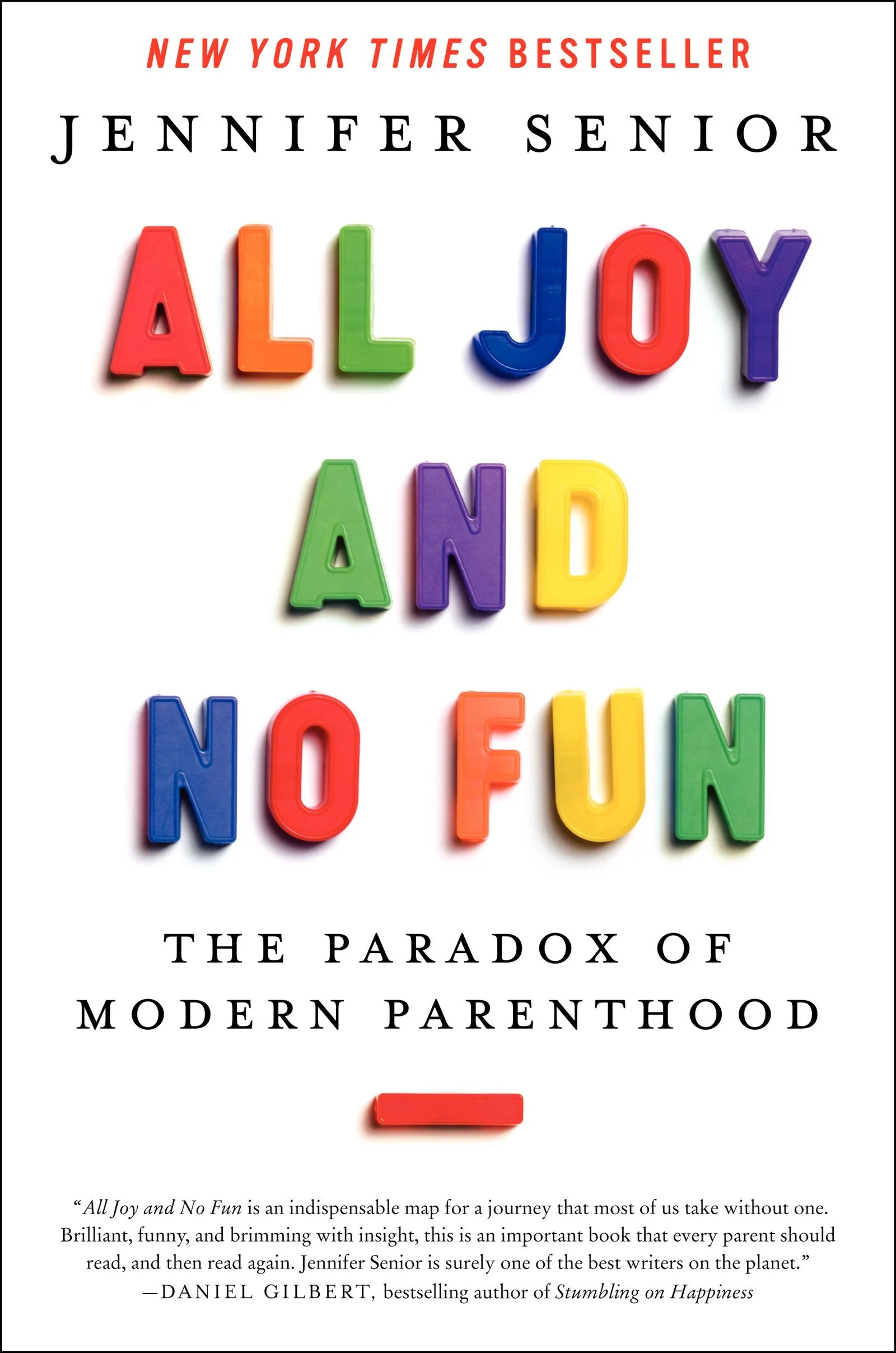
All Joy and No Fun: The Paradox of Modern Parenting by Jennifer Senior
If you have had a conversation with me in the past month, you have heard me obsessively praise this book. It is the smartest and most insightful thing I have ever read about parenting and I WRITE ABOUT PARENTING. This is not a parenting book, which no one wants to curl up with on the beach. This is a book about why parenting today is so. damn. hard. It is fantastic and BONUS I've basically stalked the author online, made her my friend, and we're going to do a google chat with all of you in mid-July!

The Cuckoo's Calling by Robert Galbraith (aka J.K. Rowling)
Full disclosure: I am not exactly what one would call unbiased when it comes to J.K. Rowling. If she announced she had copied the phone book, I would run out and buy it. HOWEVER, I also don't particularly like crime novels and was skeptical that I would enjoy one - even if it was written by my favorite author. The book follows down-on-his-luck private investigator Cormoran Strike as he investigates the suicide of supermodel Lula Landry. Surprise, there's perhaps a bit more going on. The book sucks you in from the first page and won't let you go. Escapism at its best!

Grace for the Good Girl: Letting Go of the Try-Hard Life by Emily Freeman
I am a good girl. I know. Shocking, right? I try very, very hard and sometimes all that effort becomes exhausting. Freeman uses a particularly religious lens to examine the life of a good girl but, honestly, I think what she has to say has impact no matter how spiritual you are or aren't. I read this book over a year ago and I still find myself thinking often about Freeman's thoughts on grace, the tyranny of emotions, and worthiness.

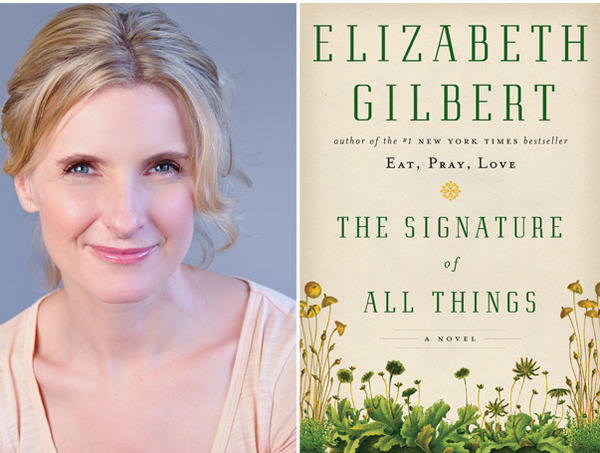
The Signature of All Things by Elizabeth Gilbert
I wrote about this book when I finished it earlier this year. Another book from one of my favorite authors that I wasn't sure I would like. Well, I did like it. I loved it and was completely swept away by the times and triumphs of 19th century botanist Alma Whittaker.
Tell me what good books you've read this year and we can crowdsource this whole summer reading guide thing!
This post contains affiliate links. Thanks for supporting bluegrass redhead with your purchases!


My podcasts


Subscribe to my weekly email


- August 2017
- March 2017
- January 2017
- November 2016
- October 2016
- September 2016
- August 2016
- June 2016
- May 2016
- April 2016
- March 2016
- February 2016
- January 2016
- December 2015
- November 2015
- October 2015
- September 2015
- August 2015
- July 2015
- June 2015
- May 2015
- April 2015
- March 2015
- February 2015
- January 2015
- December 2014
- November 2014
- October 2014
- September 2014
- August 2014
- July 2014
- June 2014
- May 2014
- April 2014
- March 2014
- February 2014
- January 2014
- December 2013
- November 2013
- October 2013
- September 2013
- August 2013
- July 2013
- June 2013
- May 2013
At the beginning of the year, I took the GoodReads Reading Challenge (AND Modern Mrs. Darcy's 2015 Reading Challenge). I set my goal at 30 books, which was TWICE as many as I'd read in 2014. I thought this was pretty bold considering I was having a new baby, but reading is a priority for me ... plus, I found some sneaky ways to get more reading in.