
Mother's Day
Mother’s Day was hard.
It was filled with great moments. My family (with a minor amount of prompting) bringing me breakfast in bed. Lots of snuggle time. Church. A great lunch at my grandmother’s house with my extended family. I even had a massage on Saturday.
Still, it was hard.

Photo Credit: Orange Leaf via Compfight cc
Mother’s Day was hard.
It was filled with great moments. My family (with a minor amount of prompting) bringing me breakfast in bed. Lots of snuggle time. Church. A great lunch at my grandmother’s house with my extended family. I even had a massage on Saturday.
Still, it was hard.
As I celebrated my role as a mother, I kept wondering what it means to be the mother to a child that is gone – or that never truly was. Do I celebrate the small moments of happiness that child brought me? Do I work to make sure that child is never forgotten? Do I honor that child’s memory by moving on?
I just don’t know.
I feel constantly tugged in different directions. I feel such sadness for the loss of our baby. I feel angry that such a stupid unfair thing happened to our family. I feel resentment over every little indignity – the empty nursery, the “baby” weight, the constant gnawing doubt.
Then, just as quickly, I feel guilty. I have two beautiful children. I’ll hear a story or read a blog post that describes suffering so much worse than mine and I want to box up my grief and put it away. I want to control it.
My head tells me there is no controlling it. My head tells me that suffering is suffering. My head tells me to listen to all of your kind voices when you tell me to grieve, to give myself time, to allow room for my sadness.
I thought I understood motherhood. The journey was long and filled with bumpy road but the ground felt steady beneath my feet. Then – all of a sudden – it’s as if I took a turn and found myself on a completely different path. I no longer understand the terrain or the challenges of this particular road. My compass is off and I can’t find a map.
I have good days – more than bad. However, the bad days seem to have a staying power that the good days can’t muster.
Mother’s Day was one of them.






Daniel Murphy and what's wrong with American priorities
Last week, Boomer Esiason, former quarterback and current sports commentator, made some very incendiary comments about Major League Baseball player Patrick Murphy, who had recently taken three days paternity leave for the birth of his son. Because babies don’t care what sport you play, Murphy’s son was born on opening day and as a result Murphy missed two games.
Esiason argued that Murphy should have forced his wife to schedule a c-section before the season started. Esiason’s comments immediately went viral and he apologized for his criticism of Murphy several days later. I’m not here to attack Boomer Esiason for a few comments he made on a talk radio show (not usually the mecca for rationality). By all accounts, Esiason is a dedicated family man himself. In fact, he was named Father of the Year in 2009 after starting a foundation to fund cystic fibrosis research after his own son Gunnar was diagnosed with the disease.
The truth is that while Esiason’s comments were extreme they represent an idea that has been part of the American philosophy for decades, especially among American men.
Work comes first. Family comes second.

Last week, Boomer Esiason, former quarterback and current sports commentator, made some very incendiary comments about Major League Baseball player Patrick Murphy, who had recently taken three days paternity leave for the birth of his son. Because babies don’t care what sport you play, Murphy’s son was born on opening day and as a result Murphy missed two games.
Esiason argued that Murphy should have forced his wife to schedule a c-section before the season started. Esiason’s comments immediately went viral and he apologized for his criticism of Murphy several days later. I’m not here to attack Boomer Esiason for a few comments he made on a talk radio show (not usually the mecca for rationality). By all accounts, Esiason is a dedicated family man himself. In fact, he was named Father of the Year in 2009 after starting a foundation to fund cystic fibrosis research after his own son Gunnar was diagnosed with the disease.
The truth is that while Esiason’s comments were extreme they represent an idea that has been part of the American philosophy for decades, especially among American men.
Work comes first. Family comes second.
Now, no one openly espouses this philosophy anymore. In doing so, you risk being called all the terrible things Boomer Esiason has been called over the last few days - a neanderthal, a misogynistic, an idiot. In the modern age, more and more people are looking for the ever elusive balance between work and family and saying your family comes first has become the accepted societal norm.
However, it is often in extreme situations that our true values become apparent. Boomer Esiason was openly attacked in the media and yet, in my personal conversations, I heard a little more doubt that what he had said was really that wrong. “He is a professional baseball player…” “He makes A LOT of money to do what he does…” People would say before quickly agreeing Esiason stepped over the line.
I’ve heard the same subtle undercurrent during past discussions of work/life choices in the media. When Marissa Mayer, the CEO of Yahoo!, returned to work only two weeks after giving birth to her first child, she was roundly criticized. However, there was also a begrudging admiration of her work ethic and several discussions of how the decision-making changes when there is that much money on the line. (Interesting update to the Mayer situation here.)
Personally, I experienced this same “work comes first, family second” ethic when my husband and I decided to give up our high-paying high-intensity careers in Washington, DC, to move back to Paducah. SO many people could not (and still cannot) understand why we would take huge pay cuts or give up careers all together so that we would be able to spend more time with our children. The fact that we were uprooting and rearranging our entire existences to put our families - not our jobs - first on the list is something I still have trouble explaining to people. Lots of people move for jobs but very few move for family.
What we are really saying is that family comes first … to an extent. What we are really saying when we talk about Daniel Murphy or Marissa Mayer is that time with our families is only worth so much. If there is enough money on the table, then it is acceptable to put your work first.
Now, for many families, this type of math is a matter of survival. As the gap between rich and poor grows wider and wider, many (too many) families have to make decisions about work that make affect whether or not their children will eat - not how much time they will spend with them. That is not the situation I’m talking about.
I’m talking about our attitudes about the very rich, the very elite, the people at the top. If we don’t hold those people to a higher standard when it comes to work and family, how will there ever be space for those of us at the bottom to make similar decisions? If we don't allow the decision-makers to put family first, how will they make decisions that allow ALL of us to put family first?

We all know how bad the statistics are for the United States. As much as we claim family comes first, we have no real societal structure in place to make that reality for families across the country. No paid parental leave. No real, affordable day care. No support for single parents, adoptive parents, working parents.
We have to start somewhere to change our work-first culture and the elites - be they in business or baseball - need to be examples. Not examples of the traditional “Work harder. Make sacrifices.” ethic that has been a part of our society for too long, but examples of how living a well-rounded life with time for work AND family makes you a happier - and more successful - person.
Examples like Daniel Murphy.







This is the way to speak to a mother
In fairness, my friends had warned me. Elizabeth said she started getting dirty looks with three. Kim also told me the comments started with her third.
Everyone is supposed to have one child. People were never kinder to me then when I had Griffin. Everyone is supportive. There’s no real investment in the sex of the child since you’re starting with a clean slate. Everyone just wants the best for you and is happy you’re pregnant.
“Congratulations!” “As long as it’s healthy that’s all that matters!”

In fairness, my friends had warned me. Elizabeth said she started getting dirty looks with three. Kim also told me the comments started with her third.
Everyone is supposed to have one child. People were never kinder to me then when I had Griffin. Everyone is supportive. There’s no real investment in the sex of the child since you’re starting with a clean slate. Everyone just wants the best for you and is happy you’re pregnant.
“Congratulations!” “As long as it’s healthy that’s all that matters!”
Then, people assume you’re going to have two. The question about when you’re first child is going to get a sibling comes pretty soon after the first birthday in my experience. Now, have them too close together and you get comments about accidents. Have them too far apart and people assume you are choosing to have only one child. People who actually DO chose to have only one child get a special breed of comments all their own.
Once when I was wondering if one child would be enough, my grandmother looked me dead in the eye and said, “What if it dies?”
So, you get pregnant again and the comments then take a specifically gendered perspective. If your firstborn is a boy, everyone assumes you’re trying for a girl and prematurely bemoans your fate should God curse you with another son. If you have a daughter, everyone assumes you’re trying for a boy and start to regale with you the costs (and drama!) associated with raising girls.
“Two boys will tear your house down!” “Two weddings! YIKES!”
Now, up into this point, people are still supportive. Very few people are judgmental of anyone deciding to have two kids. (They reserve that judgment for the purposefully childless or the one-and-doners.)
However, chose to have more than two and all bets are off.
Suddenly, the looks start. Dare to take your two young children to the grocery store with your pregnant belly in tow and prepare yourself for the stares. People stare as if your well-dressed children were barefoot and dirty with pinkeye and a croupy cough. The stares are frustrating enough but the comments make me want to apply for a conceal to carry license.
“WHOA! Got another hidden somewhere?” “My! You’ve got your hands full!”
It is INFURIATING. Here is an important lesson for all of mankind.
You have neither the right nor the obligation to comment on my reproductive choices. How many children I have or am going to have is none of your damn business (unless I am in a reality show then comment away!). Seriously, your life choices aren’t on display in the same way a young family’s is but I promise you, if they were, you would hate the comments as well.
My friend, a self-disclosed overdiscloser, once said he wants to sit down with every person he meets and dive right into their deepest life issues. He jokingly told me that he wants to ask every person he meets, “What’s the meanest thing your father ever said to you?”
Well, I’m about to ask that of the next stranger who says something about how many kids I have. The decision to have a child is deeply personal, wrought with emotional issues, and complicated beyond belief. In other words, NOT grocery store fodder people! Maybe giving back as good as I get will finally convey that message.
The truth is strangers who run their mouths are sometimes the least of my problems. What hurts the most is when it comes from people who know me. People who send me articles like this one. People who “warn” me that I don’t know what I’m getting into. People who ask me all the time if I’m going to be able to handle three kids.
Look, I have NO idea how it will be to raise three children. Anyone who has raised so much as a gerbil knows there is some knowledge that only comes from the experience itself. However, anyone who knows me should know that I am a thinker. I have spent an inordinate amount of time pondering the role of Oprah in my life so, let me assure you, I thought A LOT about the decision to have a third child.
Not to mention, there are few decisions I take more seriously than those I make regarding my children. The type of life I wanted my children to have was SO important to me that I uprooted my entire existence to move to Paducah and start over. I think about every little thing that affects their lives pretty much from the moment I wake up. Are they watching too much TV? Are they eating enough vegetables? Am I praising them too much? Do they have enough toys? Too many toys? The right kind of toys?
See, what I’m getting out here? Whatever is about to come out yo’ mouth – rest assured it is already swimming around in my head.
So, here’s a fun idea that can apply to strangers and loved ones alike.
If I look overwhelmed in the grocery store, offer to help me with my groceries! If I am chasing Amos through a parking lot with my pregnant belly, throw a foot out and trip the little buggar. If you are worried about how I’ll handle one more child, come over and babysit the two I’ve already got! Or drop off a meal (a nice idea for ALL mothers – not just new ones)!
If a comment is all you’ve got time for, try this one on for size.
“What a beautiful family! You’re doing a great job!”
What's the worst thing someone has said to you while pregnant?



This is why redshirting is complicated
We registered Griffin for kindergarten on Friday. Well, we didn’t Nicholas did. I was out of town on a business trip which is probably best since I’ve made my opposition to this latest childhood milestone abundantly clear. (Spoiler: My baby is growing up and I DON’T like it.)
With kindergarten registration begins the inevitable discussion among my friends and online of redshirting. Named after the sports practice of delaying an athlete’s participation to extend eligibility, it has taken over the academic world as parents delay elementary school entrance to allow for additional physical, social, mental, and emotional development.
Not surprisingly, parents, teachers, administrators, and child psychologist hold passionate opinions on both sides of the debate. Both Amos and Griffin are “summer birthday boys” – the youngest group in the class and also the most likely group to be redshirted by concerned parents.

We registered Griffin for kindergarten on Friday. Well, we didn’t Nicholas did. I was out of town on a business trip which is probably best since I’ve made my opposition to this latest childhood milestone abundantly clear. (Spoiler: My baby is growing up and I DON’T like it.)
With kindergarten registration begins the inevitable discussion among my friends and online of redshirting. Named after the sports practice of delaying an athlete’s participation to extend eligibility, it has taken over the academic world as parents delay elementary school entrance to allow for additional physical, social, mental, and emotional development.
Not surprisingly, parents, teachers, administrators, and child psychologist hold passionate opinions on both sides of the debate. Both Amos and Griffin are “summer birthday boys” – the youngest group in the class and also the most likely group to be redshirted by concerned parents.
For a variety of reasons, I’ve never even considered holding either of my sons back. First, Nicholas is also a summer birthday boy and never had a single problem academically. In fact, I think it’s more than fair to say he excelled from the beginning. Nicholas’s experience and the fact that we are not exactly anxious to pay for an addition year of preschool were two of the main reasons we haven’t considered redshirting.
We are incredibly blessed by the fact that neither of our children have any developmental delays so we have no extenuating factors to consider. However, I would be lying if the temptation of having children “at the head of the class” never appealed to me. Every parent wants their child to excel and I’m no different. The stories I’ve heard of the younger boys being more likely to be diagnosed with ADHD or referred to special education are scary and I would like my sons to be seen as advanced not behavioral problems.
However, when I feel myself being honestly on the fence with no obvious answer based on my individual child’s needs, I try to look to the developmental science. An article I wrote about several years on Salt & Nectar has always stayed with me in regards to this issue. Sam Wang and Sandra Aamodt, co-authors of the book “Welcome to Your Child’s Brain: How the Mind Grows from Conception to College” used the results of a large scale Canadian study to argue that while redshirted children enjoy a modest boost in performance in grade school, the same children become less motivated in middle school and high school and see a drop in performance. They also miss out on a year of potential salary reducing their lifetime earnings.
Learning is maximized not by getting all the answers right, but by making errors and correcting them quickly. In this respect, children benefit from being close to the limits of their ability.
Apparently, most children are able to bridge any developmental gaps by modeling the behavior of their more advanced peers. This seems to reinforce other parenting approaches I use in my own life, such as the concept of growth mindset and the right kind of praise. I want to give my children the chance to excel not by crafting the “perfect” environment for their current abilities but by challenging them to grow and develop new ones.
Of course, the last factor every parent must consider is the actual cutoff date itself. Currently, the cutoff date in Kentucky is October 1, leaving parents of children with birthdays between the first day of school and October 1st to decide if they want to send a four-year-old to kindergarten. Fortunately, the law has been changed and the cutoff date will change to August 1st eliminating the decision for many parents, including us with baby #3 due early September.
However, Kentucky’s cutoff is easy compared to many dates around the country. I have a close friend who lives in New York City where the cutoff date is DECEMBER 31. When she told me this over a text conversation, I was literally so confused I picked up the phone and called her. So, children had to be 5 ½ to attend kindergarten? I asked. No, in fact, you could send your 4 ½ year old to kindergarten! This seems insane to me but is apparently due to the enormous financial pressure many parents face with even one additional year of full-time daycare.
I still can’t imagine the almost two year age range many kindergarten teachers must face with each incoming class. This is to me seems to be an important consideration many parents miss. What if your child is the most advanced in the class if the teacher is so overwhelmed by teaching everything from barely literate four-year-olds to chapter-book-ready six-year-olds? No matter when your child begins school they are part of a group and what is best for the group should at least be a consideration.
Of course, there is also the chance that none of this really matters. I often think that parents that care enough (not to mention have the resources) to worry so much about redshirting wouldn’t let their child fall behind no matter what decision they make. Parents who want the best for their children educationally will go to any lengths to assure their success whether they enter kindergarten at 4 or 5 or 6.
What are your thoughts or experiences with redshirting?


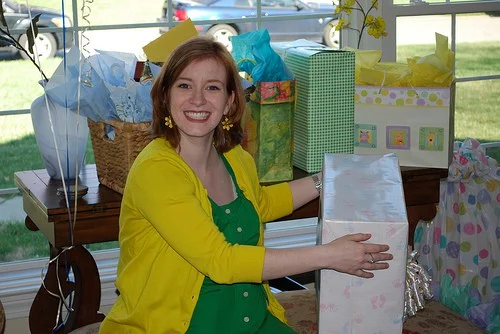



Preschool until 2020
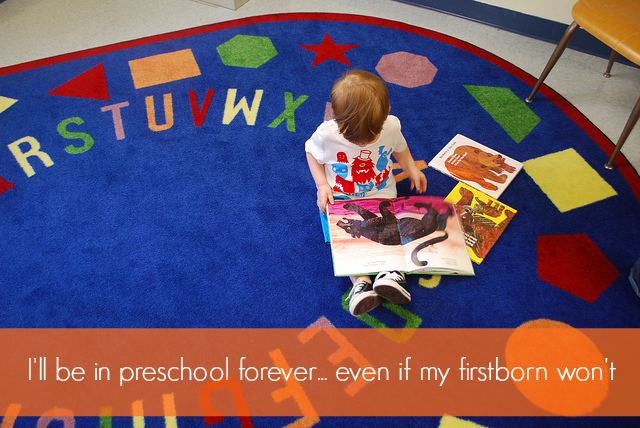
Today I'm on Salt & Nectar sharing some scary math.
Next week we register Griffin for kindergarten. I've already made my thoughts on this transition clear. For anyone who needs reminding, I'm not ready and the thought of sending my baby to elementary school makes me want to cry all the tears.
Then, I got a lovely little reminder that I've still got PLENTY of years of babydom in front of me.
Today I registered Amos for three-year-old preschool. As is often the case, the preschool director, Amos's new teacher, another mother, and I got into a discussion of kindgertarten age deadlines. Since both of my boys were born in early summer, I've never had to worry much about this decision. However, baby #3 is coming in September so suddenly the math is more important to me.
My hands-off approach to medical care
Another day, another study telling us something we previously considered “safe” is anything but.
This time a study out of Denmark found a strong correlation between acetaminophen use among pregnancy women and higher rates of attention-deficit/hyperactivity disorder (ADHD) in their children. We all know correlation isn't causation, but still here's a drug that is considered one of the safest on the markets (although I would have disagreed with that assessment before this study) suddenly seeming more complicated then we first thought.
I have a deep distrust of medication or medical treatment considered “safe” during pregnancy. It is unethical to test things on pregnant women, no one is going to sign up to use themselves and their babies as guinea pigs. Therefore, true safety can never really be established. However, it goes beyond that for me. If I'm being honest, I have a deep distrust of medical care generally.

Photo Credit: Alex E. Proimos via Compfight cc
Another day, another study telling us something we previously considered “safe” is anything but.
This time a study out of Denmark found a strong correlation between acetaminophen use among pregnancy women and higher rates of attention-deficit/hyperactivity disorder (ADHD) in their children. We all know correlation isn't causation, but still here's a drug that is considered one of the safest on the markets (although I would have disagreed with that assessment before this study) suddenly seeming more complicated then we first thought.
I have a deep distrust of medication or medical treatment considered “safe” during pregnancy. It is unethical to test things on pregnant women, no one is going to sign up to use themselves and their babies as guinea pigs. Therefore, true safety can never really be established. However, it goes beyond that for me. If I'm being honest, I have a deep distrust of medical care generally.
I'm not a Christian Scientist. I'm not a conspiracy theorist who believes the government or corporations or Barack Obama are out to drug us up. I'm not out to get rid of doctors or hospitals all together.
If I was in a car wreck, I'd want to go to the hospital. If I was diagnosed with cancer, I would want the best doctor around. I think our medical care system does a pretty dang good job of taking care of people when there is something bad wrong with them.
However, I think our medical care system does a dang near terrible job of taking care of healthy people, particularly pregnant women. Pregnancy is not a trauma or an illness. The common cold or a fever or your average virus is not something that needs to be beaten into submission with medication and medical intervention.
The human body is an amazing creation, which I believe – if in an average, healthy state – can handle most of the things thrown at it. However, taking your trust away from the power of the human body and placing it completely in the hands of a human being, who can be distracted or misinformed or downright wrong, is a dangerous proposition in my opinion.
First, there is the real reality of human error. Anywhere from 200,000 to 400,000 people die every year in the United States because the flawed human beings making medical decisions just plain old get it wrong. That makes medical errors the THIRD leading cause of death in the United States! When you expose yourself to medical care, you take the risk that someone will make a mistake that could cost you your life. Plain and simple.
Second, even when these medical professionals make the “right” decision, there seems to be an assumption they are making this decision on complete information. However, they are NOT. In fact, they almost never are. Doctors who were telling their pregnant patients Tylenol was safe thought they had all the information, until they didn't. The list of reversals in medical knowledge is long and covers everything from the ancient practice of bleeding to the modern recommendation of a low fat diet.
We just don't know. That's why my threshold for any medical intervention or treatment with my own healthy body or those of my children is very, very high.
It's why my children aren't circumcised. It's why I give birth at home. It's why I rarely give my children antibiotics or medications of any kind. It's why I rarely take medications myself.
It's why last week when Amos had a febrile seizure the only medical intervention I sought was a five minute telephone conversation with my pediatrician. I won't lie and say it was easy. When I realized what was happening to my son, panic flooded every cell in my being. And despite everything I've said up until this point, my first and strongest instinct was to talk to my doctor.
Now, here is where my approach was probably a bit different. I don't trust him because he has M.D. at the end of his name. This is a doctor I have come to trust because his hands-off approach is almost as strong as mine. This is a doctor I have come to trust after five years of watching him trust the human body and distrust medication. This is a doctor I have come to trust because he will argue with me and debate with me and sometimes admit he just doesn't know the answer.
I didn't want any doctor. I wanted MY doctor. When two receptionists in a row advised me to call 911, I had to battle not only their voices but the panicked voice in my head to insist – to DEMAND – to speak to my doctor.
When he finally answered the phone, I burst into tears. “You're the only one I trust!” He assured me I was right. He told me my instinct was correct. Amos was fine and that the seizure was scarier for me then it was dangerous for him. In fact, it was the human body doing what it does best - protecting itself. He told me the only concern was what was causing the fever in the first place but as long as I saw improvement there was no need to bring him in.
So, I didn't.
Instead of exposing Amos to the emergency room (and a mandatory meningitis test) or even the additional germs of the doctor's office, I opted for one dose of Tylenol and one dose of Ibuprofen before bed. He was on the mend by the next day and back to himself less than 48 hours later.
Fighting the traditional approach to medical care isn't always easy. My own personal philosophy has come after decades of educating myself and practice, practice, practice. I've learned what to look for in a doctor. I've learned how to say no to medical tests and medications, which is still really hard. I've learned to get second opinions from friends who are both medical professionals and lay people like me who think there might be a better way.
But I will say this, it might not be easy but it is worth it.







Putting on the brakes
Once when reading an interview with the eternally fantastic Bonnie Raitt, I stumbled upon this quote.
On her two-year hiatus:
Who would have thought that rest was a sacred act? A therapist I love said, “Only go as fast as the slowest part of you can go.”
It’s a lesson I have to learn over and over again. A lesson I learned again this week when struck with the stomach virus from hell.

Once when reading an interview with the eternally fantastic Bonnie Raitt, I stumbled upon this quote.
On her two-year hiatus:
Who would have thought that rest was a sacred act? A therapist I love said, “Only go as fast as the slowest part of you can go.”
It’s a lesson I have to learn over and over again. A lesson I learned again this week when struck with the stomach virus from hell.
We can have a to do list a mile long and a dirty house and twenty piles of laundry but if our body says no, our body says no. It’s unfortunate that sometimes I only slow down when forced to by my intestinal track because the truth of that quote goes far beyond the limits of our physical selves.
Recently, I was reading the equally fantastic Tara Sophia Mohr and she was discussing a recent article she’d stumbled upon entitled “12 Things Successful People Do Before Breakfast.”
What was my first thought?
“Oh, I better click on that and start doing all those things!!!”
Ummm, no. Luckily, I decided to finish reading Tara’s post first and I am so glad I did.
From Tara:

In a world, that tells us successful people DO, successful people ACHIEVE, successful people GO I am all to susceptible to believing that merely being or enjoying or breathing isn’t all that important.
But it is important. Sometimes it's important to rest. Sometimes it's important to watch A LOT of Downton Abbey (not that I've ever done that) and it's important to not then beat ourselves up for all the time we're "wasting."
I think it’s especially important as parents.
For as parents, we are not only limited by the slowest parts of ourselves but by the slowest little members of our families. If you’ve ever tried to force a two-year-old to hurry up, you know the truth of that statement.
Children will not be rushed. Children aren’t particularly great at doing, but they are stinking geniuses at being. Being in the moment. Being happy. Being with you.
Only go fast as the slowest part of you can go - be it your body, your spirit, or your toddler.
Don't wait for the stomach virus, people. Trust me.
My baby and kindergarten

Let’s just get this out of the way. I don’t want him to go.
There, I said it.
He’s my firstborn. He’s my baby. He still runs up to me for hugs and loves to cuddle and I don’t want him to go to kindergarten. And yet here I am, setting up appointments for kindergarten screenings, getting to know the teachers, figuring out who will be in his class.
And all against my will.
I remember vividly the first week Griffin was born. For one reason or another, I had attached special importance to the first week. I could feel every second tick by. I wanted to dig in and slow everything down. I knew. I just KNEW once that first precious week was over that it was going to be three blinks and I’d be putting him on the bus to kindergarten. A rush of diapers and blocks and preschool parties and my long days with him would be over.
AND I WAS RIGHT.
I know kindergarten is even worse. Once they spend a majority of their day elsewhere, the time you do have with them passes even quicker. If his babyhood passed in three blinks, his primary school days will pass in one. Then, I’ll be balling my eyes out as he walks the stage at graduation and moves far away to follow his dreams and never calls his mama.
This is the worst.
What I hate more than the thought of how quickly the time will pass is how quickly he will change. My friends report the same phenomenon over and over again. They go to kindergarten and they change. They are no longer your sweet little kid. They grow a little bit harder and edgier. They pick up bad habits from their friends. They might as well be describing a person’s first time in prison.
I don’t want him to change! I want him to grow and learn and develop but does that have to be in exchange for attitude and sass and disrespect. If I’m being really honest, I want to protect him. I know there will be kids different from him in school. Kids that have seen and experienced things I’ve spent the last four years protecting Griffin from and that scares me.
Not because I don’t think he should ever learn to confront these types of challenges or deal with people different than him, but because I don’t really want him to learn these lessons at FIVE.
My logical mind tells me he’ll be fine. My friend’s kids are fine. They are better than fine. They are really great kids. But still, I just can’t get behind the positivity.
So, if I grimace at your encouragement or frown at your kindergarten stories, give me a pass.
This mama is wallowing. This mama is singing the kindergarten blues and she’s singing them hard.
How did you (or are you) handling the transition to kindergarten?
My podcasts


Subscribe to my weekly email


- August 2017
- March 2017
- January 2017
- November 2016
- October 2016
- September 2016
- August 2016
- June 2016
- May 2016
- April 2016
- March 2016
- February 2016
- January 2016
- December 2015
- November 2015
- October 2015
- September 2015
- August 2015
- July 2015
- June 2015
- May 2015
- April 2015
- March 2015
- February 2015
- January 2015
- December 2014
- November 2014
- October 2014
- September 2014
- August 2014
- July 2014
- June 2014
- May 2014
- April 2014
- March 2014
- February 2014
- January 2014
- December 2013
- November 2013
- October 2013
- September 2013
- August 2013
- July 2013
- June 2013
- May 2013
I get asked a lot of questions about parenting and birth. 5 pregnancies, 3 kids, 2 home births, 1 hospital birth, 1 miscarriage, and 1 pregnancy loss doesn't make me a doctor, but it does leave me with a special kind of expertise.